
Anti-Oppressive Practices
In-Depth Explanation
In-Depth Explanation
Anti-Oppressive Practices and Empowerment
There are many types of inequality present in the world today including income, wealth, pay, health, international, educational, political, and racial inequality among others. Inequality and prejudice run hand in hand. Social Work stands against all forms of inequality and prejudice, no matter its type.
Core Principles
Anti-Oppressive Practice (AOP) operates from several key assumptions:
Recognition of Systemic Oppression: Social problems are rooted in structural inequalities, not individual failings.
Intersectionality: Multiple forms of oppression (racism, sexism, classism, etc.) intersect and compound each other.
Power Analysis: Understanding who has power, who doesn't, and how that power is maintained is essential.
Empowerment: The goal is to help individuals and communities gain the power and resources to advocate for themselves.
Social Justice: AOP actively works toward a more equitable distribution of resources and opportunities.
Income Inequality
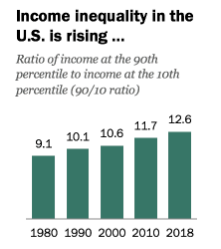
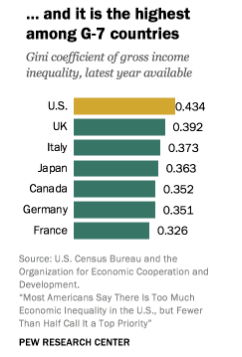
The uneven distribution of income among a population:
The Pew Research Center found that income inequality has increased by 39% since 1980.
The World Inequality Report found that the richest 10% of the global population takes 52% of global income, while the poorest 50% earns only 8.5%.
Wealth & International Inequality
Wealth Inequality: The World Inequality Report found that the poorest half of the global population owns just 2% of total wealth, while the richest 10% own 76%.
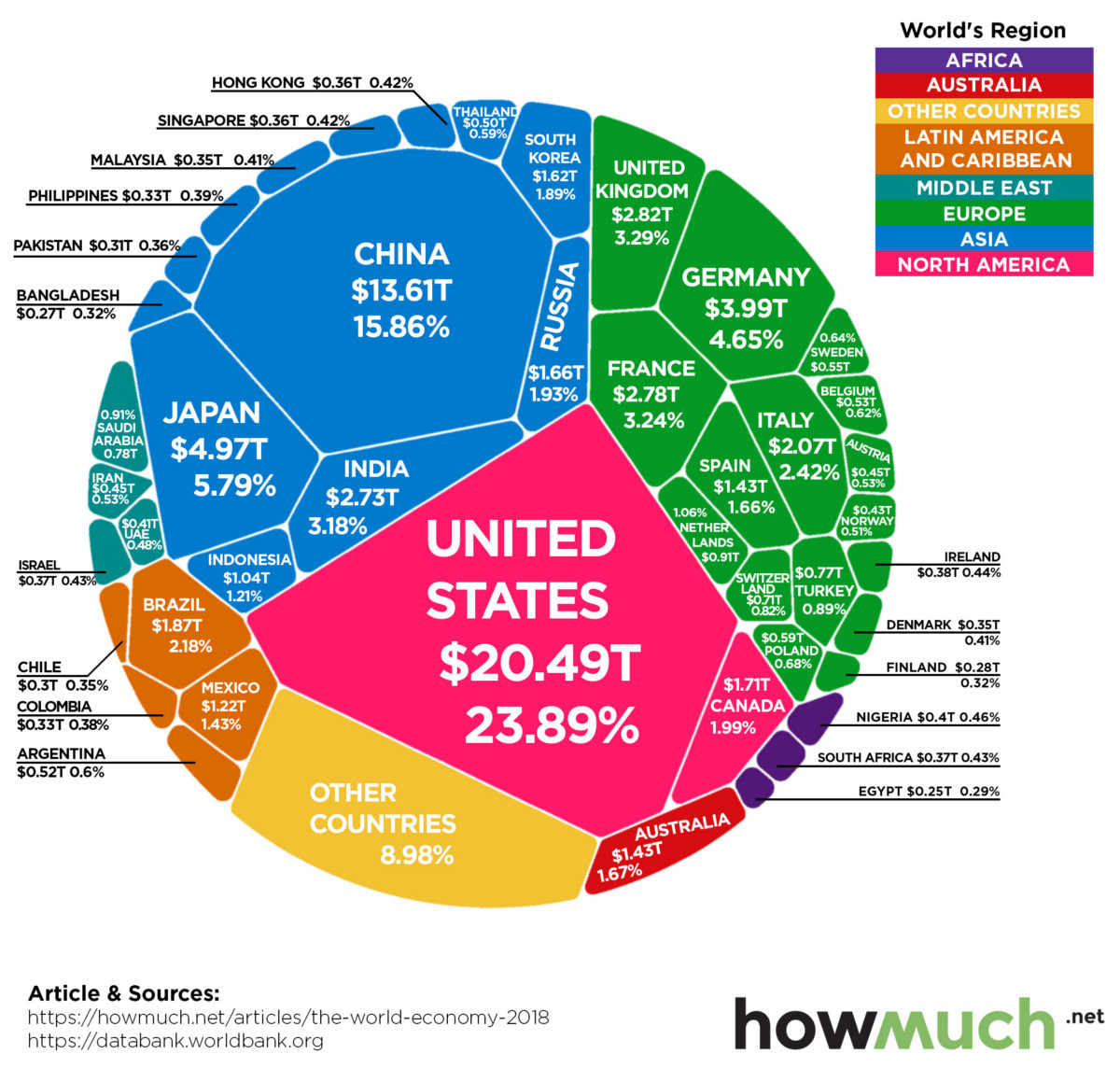
International Inequality: The World Economic Forum found that just 15 countries account for 75% of the world's GDP—out of 195 countries.
(click to enlarge)
Pay & Health Inequality
Pay Inequality: The Economic Policy Institute found significant wage gaps:
• White women: 83.1% of white men's wages
• Black women: 69.8% of white men's wages (~$18,000 less annually)
• Hispanic women: 64.6% of white men's wages (~$21,000 less annually)
Health Inequality: The Institute for Health Metrics found the life expectancy gap between the best- and worst-performing U.S. counties was 12.6 years in 2000, grew to 15.6 years by 2019, and accelerated to 20.4 years after COVID-19.
Educational Inequality
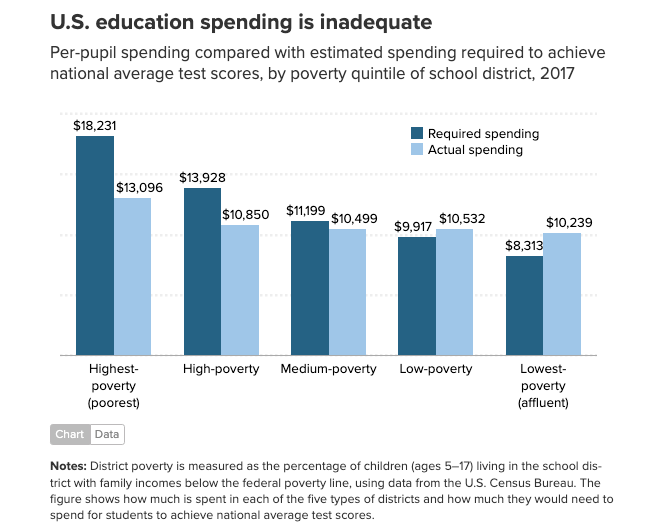
The Economic Policy Institute found that higher-income families receive more educational funding, requiring less supplementation to achieve national test score averages.
Cascading Effects: Educational inequalities lead to disparities in income, incarceration rates, marital success, and many other life outcomes.
(click to enlarge)
Political Inequality
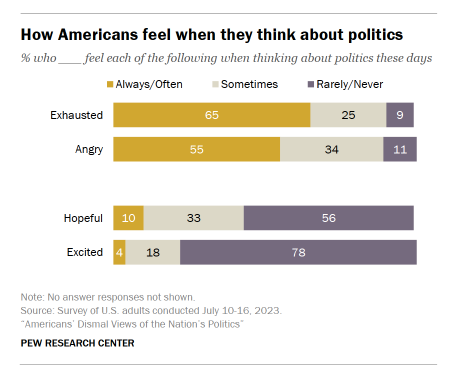
The Pew Research Center found most Americans aren't happy with the political system—an indicator of underrepresentation.
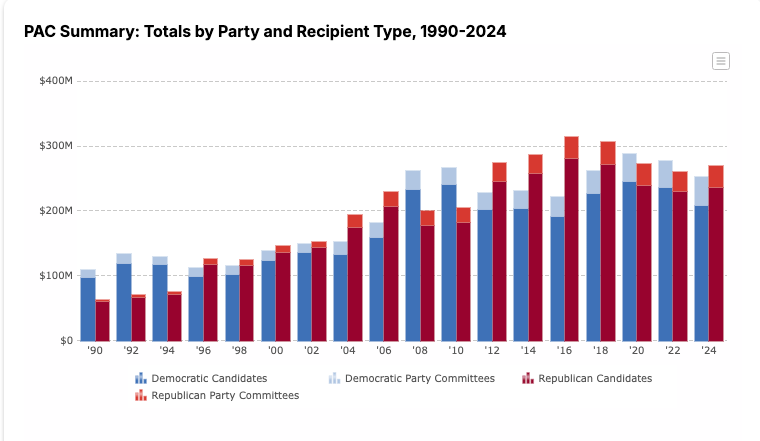
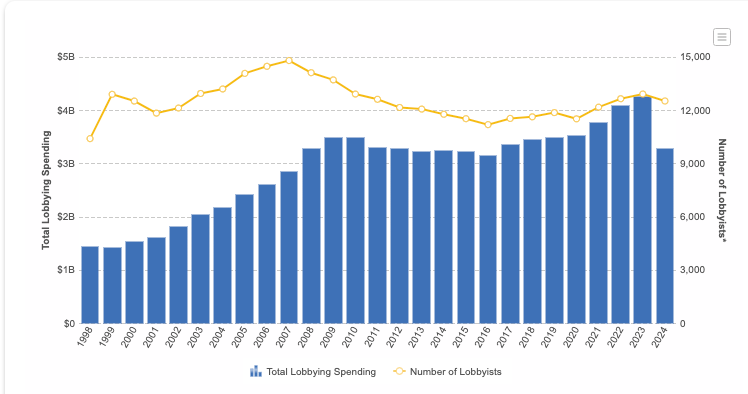
The Role of Money: Super PACs and lobbying allow those with financial resources to disproportionately influence political outcomes. Billions are spent each year by lobbyists attempting to further their interests.
(click to enlarge)
(click to enlarge)
(click to enlarge)
Types of Prejudice
Definitions from Merriam-Webster, with the exception of "religious prejudice"
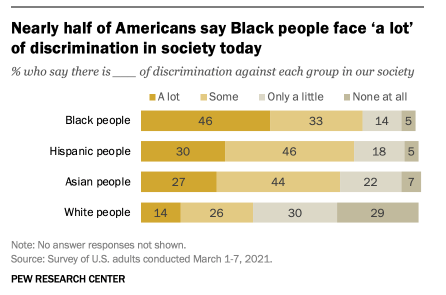
Racism: A belief that race determines human traits and capacities. The Pew Research Center found nearly half of Americans say Black people face "a lot" of discrimination.
Ageism: Prejudice against a particular age group. The American Society on Aging found 64% of older workers have experienced age-based discrimination.
Sexism: Prejudice based on sex. The United Nations found nearly 90% of people globally hold some bias against women.
Classism: A belief that social/economic station determines value. The National Institute of Health found people stereotype others based on assumed social class.
Homophobia: Discrimination against or fear of homosexuality. A Gallup poll found 64% of LGBTQ participants had experienced prejudice or discrimination.
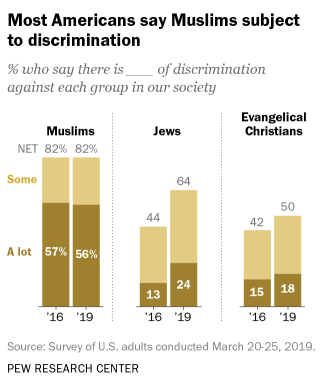
Religious Prejudice: Negative attitudes toward different religious views. The Pew Research Center found most Americans say Muslims face discrimination.
Xenophobia: Fear and hatred of strangers or foreigners. The National Institute of Health found two-thirds of U.S. states had anti-immigration policies between 2009-2019.
(click to enlarge)
Putting It All Together
Anti-Oppressive Practice and Empowerment call us to:
• Recognize the many forms of inequality and prejudice
• Understand how these systems interconnect and reinforce each other
• Acknowledge our own positions of privilege and limitation
• Empower individuals and communities to advocate for themselves
• Act to create more equitable systems and policies
Your Role: While we didn't cover any of these topics in real depth, we recommend that you continue learning. A quick internet search on each topic will increase your basic awareness of the social inequalities and prejudices that people across the world experience regularly.
Rate This Theory
All ratings are anonymous
Help others by sharing