
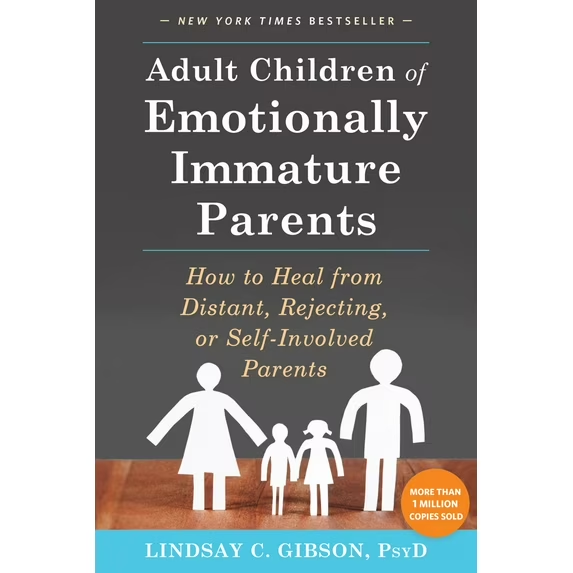
Adult Children of Emotionally Immature Parents
by Lindsay C. Gibson
Link blocked? Copy it and paste in a new browser tab.
Your Rating
All ratings are anonymous
Help others by sharing
While the book focuses on identifying emotionally immature parents, its deeper value lies in providing concrete identifiers that can reveal emotional immaturity within oneself.
The book outlines four types of emotionally immature parents:
Four Types of Emotionally Immature Parents
- Emotional - Emotional instability marked by intense highs and lows and unpredictability. Everyone walks on egg shells around them. Control others through emotional tactics like holding grudges and keeping score. Need to be the center of attention.
- Driven - Overly focused on getting things done and having others do things they way that they do them. Constant evaluation of kids' performance. Unrelenting and over-the-top push for excellence.
- Passive - Love you but don't help you. When things get tough they disengage emotionally turning a blind eye to harmful impacts. They need to be the focus of someone's affection, most often their children.
- Rejecting - Act like their children are a nuisance and that they don't want them around. Angry and abusive. Avoid all intimacy.
Emotionally immature parents display recognizable signs of their immaturity. The book delineates these signs:
Signs of Emotional Immaturity
- Rigid and Single-Minded: Can't see past their own ideas.
- Low Stress Tolerance
- Do What Feels Best by Following the Path of Least Resistance
- Subjective Rather than Objective: Acts on what feels true rather than what is true.
- Egocentric: Self-preoccupied. Would never see themselves as defensive or insecure. Constantly monitoring if others have met their needs and if something has offended them.
- Self-Referential: Always take conversations back to themselves and their own experiences or closes the conversation without engaging further.
- Center of Attention: Dominates the group's time and energy.
- Promote Role Reversal: Make kids take on parenting roles.
- Low Empathy and Emotionally Insensitive: Blind to how they make others feel or don't care.
- Inconsistent and Contradictory
- Developed Defenses Shielding Themselves From Their True Feelings
- They Fear Feelings
- They Focus on the Physical, Not the Emotional: Providing food, shelter, etc. but not emotional warmth.
- Killjoys: Curb enthusiasm and excitement of themselves and others.
- Intense but Shallow Emotions: Dramatic reactions but lacking in emotional depth and complexity.
- Don't Experience Mixed Emotions: The ability to feel multiple emotions simultaneously is a sign of emotional maturity.
- Difficulties with Conceptual Thinking: Reject complexities, narrow-mindedness, lack of imagination.
- Literal Thinking: Talks about what happened or what was observed rather than ideas or feelings.
- Intellectualizing Obsessively: Talk about their passion subjects at length but don't really engage with the other person.
People tend to deal with their emotional immaturity in one of two ways, externalizing or internalizing. People may exhibit one or the other or both depending on the person and the circumstances.
Two Ways of Dealing with Emotional Immaturity
- Externalizing - Demand that others or the world change to meet their needs. Rely on outside sources to be emotionally okay. Blame others and make excuses for themselves. Engage in punishing and rejecting others.
- Internalizing - Blame themselves and take responsibility on that isn't theirs. Feeling of guilt and being an imposter. Self-sacrificing and then become resentful for how much they do for others. Apologize for needing help.
Healing From Your Childhood Wounds
The book includes an exercise designed to distinguish between the "true self"—who a person intrinsically is—and the "role self"—the persona adopted based on roles taken on over time. The purpose is to reconnect with an older, more mature version of the uninhibited self from childhood.
True Self and Role Self Exercise
- Make a list of "your true self" which is linked back to your childhood. What were you interested in? What did you like to do? What made you feel good?
- Make a list of "your role self" which is linked to who you currently are. What have you compromised in order to feel loved or wanted? What do you need to do in order to feel good about yourself? How do you spend your time on things that don't bring fulfillment and joy? What do you try to hide from others? What do you make yourself do that doesn't intrinsically speak to you?
The book identifies several aspects of healing:
Aspects of Healing
- Breaking Down False Roles: If a role does not bring joy, it is almost certainly a false role. A true role is invigorating and rejuvenating—it inspires passion.
- Acknowledging True Feelings: If something consistently fails to create positive feelings, it may be time for greater honesty about whether that path is the right one—or at least whether it needs to change in its current form.
- Anger: Anger can serve as a helpful emotion to inspire change, particularly for those who habitually suppress it. This is not to suggest that anger should go unchecked or that it is the ultimate goal, but allowing oneself to feel it may be a necessary step.
- Better Self-Care: Prioritizing activities that emotionally replenish and recharge. Making time to attend to basic emotional needs is essential.
- Relationship Breakdowns: Relationships function as a magnifying glass for personal issues. Relationship difficulties can serve as valuable indicators of areas that still require attention.
- Idealizing Others: Recognizing immaturity for what it is, regardless of its source. Acknowledging immaturity—even in parents or a spouse—is not disrespectful; it is realistic.
- Recognizing Strengths: Learning to appreciate personal strengths is neither boastful nor arrogant when grounded in truth. Knowing and expressing competence is not only acceptable but healthy.
- New Values: Values serve as life's compass, and they naturally evolve over time. Periodically evaluating whether current actions align with current values is a worthwhile practice.
- Getting Free of Childhood Issues: Fears often serve as indicators of unresolved childhood issues. Investing the time and energy to heal from those fears yields significant benefits.
Separating From Emotionally Immature Parents and People
Steps to Separate
- Become Observational: The first step is always awareness. If you can't even recognize that they aren't emotionally mature, your chances of becoming unenmeshed with them are slim. Treat them as if you were a scientist studying something. Note their behaviors, words, tones, etc. and do so without becoming emotionally activated. Reactivity is emotional engagement, not observation.
- Relatedness vs. Relationship: Relatedness has no goal of having a satisfying emotional exchange. Know which relationships are more relatedness oriented and which are relationship oriented.
- Express and Let Go: Express your truth calmly and non-judgmentally without any attachment to how it's received because chances are they won't receive it well. Your communication is for your own sake not theirs so once you've expressed your truth, let it go.
- Focusing On the Outcome, Not the Relationship: If you expect an emotionally immature person to act maturely, you will be disappointed. Don't focus on controlling how someone acts and responds, focus on the question at hand or outcome wanted rather than the relationship with that person. Don't take emotional bait.
- Hold On To Your Self: Stay observational.
Identifying Emotionally Mature People
The book identifies several markers of emotional maturity:
Signs of Emotional Maturity
- They work with reality rather than fighting it. They don't spend time on what "should" be, they spend time on what is.
- They can feel and think at the same time. They are reasonable even when emotional.
- They are consistent.
- They don't take everything personally.
- They respect your boundaries and don't push them.
- They give back reciprocally.
- They are flexible and compromise well.
- They're even-tempered.
- They're willing to be influenced.
- They're truthful.
- They apologize and make amends.
- They're empathetic and make you feel safe.
- They make you feel seen and understood. They are curious about you.
- They provide comfort and allow others to comfort them.
- They reflect on their actions and try to change.
- They can laugh and be playful.
- They're enjoyable to be around.