
The Last Hours of Ancient Sunlight
by Thom Hartmann
Link blocked? Copy it and paste in a new browser tab.
Your Rating
All ratings are anonymous
Help others by sharing
The book is a denouncement of a culture that has put the lives of billions of people in jeopardy.
One of the first points made in the book is how our population has exploded in the last 100 years, all made possible by increased food output enabled by oil. The author estimates that when our oil reserves run out, which is currently estimated to happen in 47 years, between 5-7 billion people will starve to death. That is assuming our consumption remains at our current rate, although it is more likely to continue to increase due to an expanding population and trends of increasing oil consumption. If we continue to use oil as we are, not only do we risk more than half of the population starving to death once it runs out, but we also risk hitting a tipping point for global warming which will result in large-scale shifts on a global scale.
Cataclysmic Problems We Face as a Species
- In 1994 the UN reported that 70% of ocean fish stocks were "fully exploited." The World Bank now puts that number at 90%. *Note: this is a disputed claim. The National Institute of Health, National Geographic, and the BBC all support this assessment, although other sources claim otherwise. Given the scale of global population and the heavy dependence of many populations on fish as a dietary staple, the notion of unlimited fish stocks appears untenable.
- The world's topsoil is declining. For anyone who doesn't know, topsoil is nutrient rich soil that is a requirement of farming. 50% of productive soil has disappeared in the last 150 years and it continues to erode 10 times faster than it can be replenished. When topsoil disappears, we will have a significantly more difficult time growing food.
- Our current logging practices are leading to desertification. Tree roots actually draw moisture into the ground and send it back up into the air through its leaves. Without trees to draw moisture into the ground, the ground becomes able to hold less moisture over time eventually resulting in desert. Additionally, the moisture the trees would've given back to the atmosphere resulting in rain downwind is also altered which leads to other areas getting less rain, also leading to desertification. Global warming also speeds up this process according to The National Geographic.
- Deeper groundwater has salt in it which is converted by trees to strengthen its bark leaving drinkable water. As trees are cut down, the deeper salt water rises without a filtration agent which eventually makes our groundwater undrinkable and the soil unusable.
- Male sperm count has dropped 50% between 1938 and 1990 which is said to be linked to pesticide use. We are on track to make ourselves completely infertile.
- Drug resistant pathogens are on the rise due to chemical use in our foods. Moreover, new diseases could be introduced with the melting of the polar ice caps releasing long-frozen strains.
- Fresh water sources are running out all over the world and the water we do have increasingly contains harmful chemicals in it.
- The world is going through a mass extinction. We are losing 17,000 to 100,000 species per year which can result in destabilized ecosystems among other potential problems.
Issues Associated with Global Warming
- Water levels are rising and swallowing coastal cities. Currently water levels are estimated to rise 1-3 feet by 2100 but up to 15 feet by 2150 if the ice sheets melt quickly.
- More severe natural weather that result in more damages to the impacted area. This includes heat extremes, wildfires, droughts, tropical cyclones, heavy precipitation, floods, and ocean heat waves.
- Global warming may change the flow of the Great Conveyor Belt, a warm water current responsible for keeping Northern America and Europe from a near permanent ice age. As the polar ice melts and enters into the water it could impact the flow of the Great Conveyor Belt making both places largely uninhabitable.
- The oceans absorb 26% of total carbon emissions. This has led to oceans becoming more acidic which impacts all life in the sea negatively such as the disintegration of coral reefs, a staple of healthy ocean ecosystems, and has led to oceanic dead-zones where nothing can live due to the concentration of gasses in the water.
- Carbon trapped on land in permafrost contains 500% more carbon than global carbon emissions. As the global temperature increases, these carbon stores get released into the atmosphere further increasing the temperature.
- The ocean holds an inconceivable amount of methane trapped at deep levels by low temperature and pressure. Methane is 105 times more potent as a greenhouse gas than carbon dioxide. While the ocean releasing its carbon has been deemed unlikely by scientists, a large-scale carbon release is possible and becomes increasingly possible with increased global temperatures. An increase in temperature could release that methane leading to an additional 4-5 degree increase in global temperature resulting in extinction level heat. A large carbon footprint and consequent temperature spike is the proposed cause of the Permian Mass Extinction when 95% of life on the planet died.
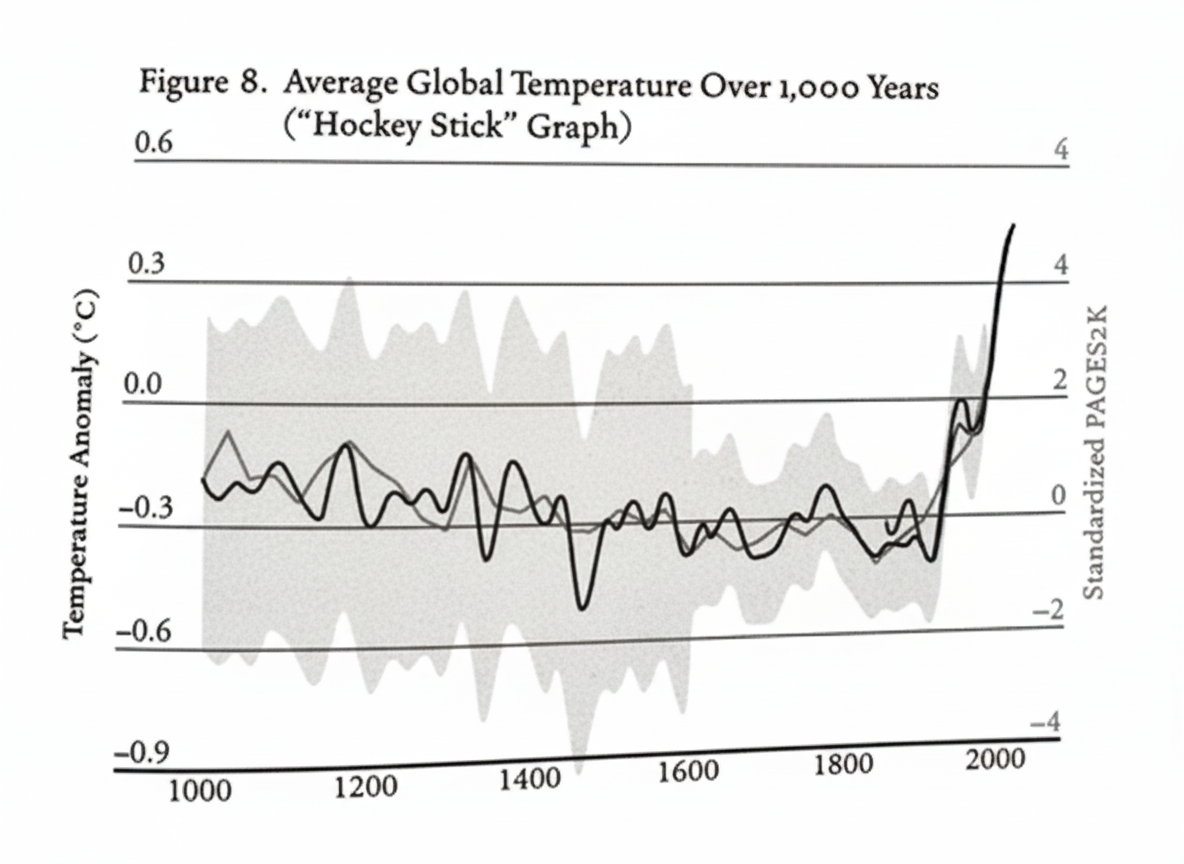
If the current trajectory continues, large-scale net-negative changes are likely within the coming decades.
The author contends that this isn't just a problem that can be resolved by simply being more environmentally conscious, he argues that the core of the problem is cultural and true change requires a shift in the dominant world culture. He distinguishes two types of cultures, young and old cultures. Young cultures desire to dominate their surroundings and use up their resources quickly. In order to survive they must conquer neighboring areas for their resources. Eventually they self-destruct when their resources run out, the cause of many great empires collapse historically. Older cultures try living in harmony with the Earth and others and tend to exist for thousands of years. They value collaboration and community and are defined by caring for the members of their culture as much as they care about themselves. These cultures tend to work very little, just as much as their food needs require (typically 2 hours a day), and experience less health issues than we do today in nearly every category. The myth that "uncivilized" cultures are better off with a 40+ hour work week and a "do it yourself" mentality is a hard argument to make once you realize the intangible costs associated with the switch.
We are so accustomed to the culture of dominance that we often forget there is another way to live. In the book the author gives many examples of cultures that subsisted without a need or desire to dominate others, even to the point of lacking a word for the concept of war. In some of these societies humanitarianism and the sharing of resources was the ultimate measure of social status. The author attests that global problems we are about to face come as a consequence of a mentality that seeks to dominate rather than live in harmony. He goes over many examples of companies and governments that have willingly committed egregious human rights violations which he cites as a natural consequence of our younger culture mentality. "We 'eat' (consume) other humans by destroying them, destroying their lands, and consuming their life-force by enslaving them either physically or economically." This mentality has led to the general oppression of humanity and its impacts can be seen in the level of mental health problems rampant in modern society. The oppressed recognize their own oppression even if only on a subconscious level.
Corporate Robots & Cultural Shift
One particularly striking metaphor in the book likens corporations to robots—entities that cannot be killed, possess great wealth, and have convinced society to allow them to operate with minimal regulation. These "robots" continue to grow in power, acquiring land and businesses from individuals (or simply taking or destroying them), constraining the human population through low wages and rising costs of living, and in some cases knowingly poisoning and harming people. Framed in these terms, corporate behavior becomes difficult to excuse. In the late 1800s, companies were required to report to the government every 40 years, and if a company was not operating in the interest of general welfare, it was legally disbanded. The reasons for abandoning that model of business oversight remain worth questioning.
The book's message is similar to the book Ishmael by Daniel Quinn, albeit a nonfiction and non-God oriented version, as well as ideas espoused by Plato in The Republic. In both books they echo the sentiment that a mentality of only caring about oneself inevitably leads to conflict, conflict that only benefits those in power.
Our societal values have made us complicit in the devastating changes on the horizon, whether or not we acknowledge it. Only by changing our cultural mentality of competition and scarcity will we be able to sustainably live in the world. If we want to survive as a species, a shift in consciousness is required.