Think Again
by Adam Grant

Link blocked? Copy it and paste in a new browser tab.
Your Rating
All ratings are anonymous
Help others by sharing
Progress is impossible without change; and those who cannot change their minds cannot change anything.
— George Bernard Shaw
Part 1: Individual Rethinking
The book begins by introducing four mentalities that shape how people relate to knowledge and learning.
The Four Mentalities
The Preacher
Preachers treat their beliefs as facts, even when evidence doesn't support them. They have decided that what they know is correct simply because they believe it to be right. They aren't concerned with whether their beliefs are actually true—they're concerned with preaching to others about how right they are.
The Prosecutor
Prosecutors are most concerned with telling other people how they are wrong. They are the fact-checkers, but not for the sake of truth—for the sake of their own ego. They thrive on proving people wrong, not on discovering what is right.
The Politician
Politicians combine the preacher and prosecutor mentalities—not only claiming that their opinion is fact, but that everyone else's opinion is wrong. Their blend of charisma and skill at attacking opposing viewpoints leads others to follow on blind faith and mutual disdain for the other side, treating any view held by opponents as automatically incorrect.
The Scientist
Scientists are pursuers of truth. Their focus is not on needing to be right or attacking the other side—their goal is accurate knowledge. They will admit what they don't know and change their position without hesitation when presented with disconfirming evidence.
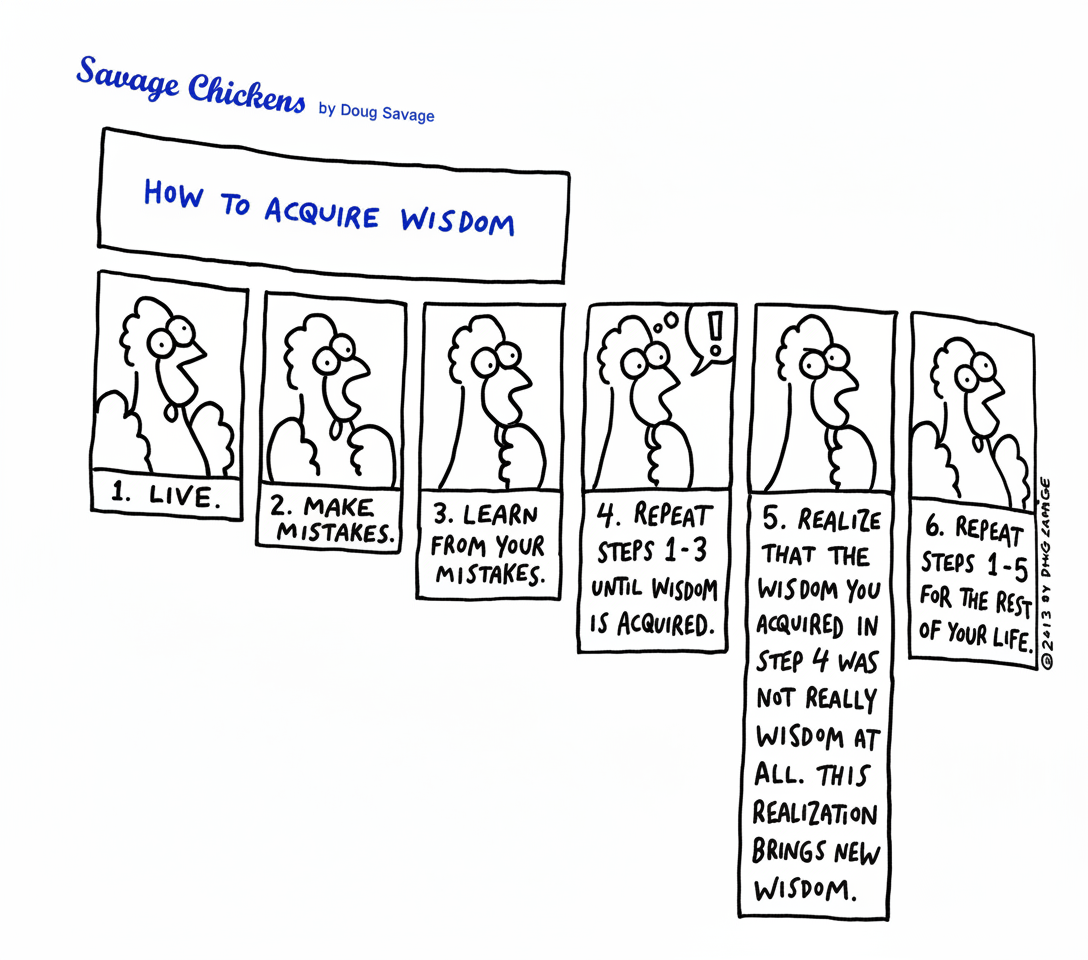
This book is about learning to think like a scientist. A scientist constantly examines and re-examines their beliefs. A scientist recognizes that what they were told by a friend in sixth grade may be inaccurate and understands that the amount of knowledge they don't have far exceeds the amount they do. A scientist demonstrates wisdom by acknowledging how little they know and routinely rethinking what they assume to be true.
Being a scientist is not just a profession. It's a state of mind.
Among the many examples in the book, a few stand out. The first involves forest firefighters caught in a wildfire. They were running with heavy gear on their backs to escape the rapidly accelerating flames, but only one person thought to drop his gear so he could run faster. Firefighters are taught to treat their gear with reverence—it can mean the difference between life and death—but when running for their lives, that gear was a liability, not an asset. Still, most never even considered letting it go. The second example is BlackBerry, a phone whose primary purpose was sending and receiving emails. The company was worth $70 billion in 2008 and had the chance to pivot toward text messaging, but the owner was convinced his original vision was best. Today, BlackBerry has all but faded into obscurity. The third example is Steve Jobs and the iPhone. When the idea was first pitched, Jobs called it "the dumbest idea I've ever heard." Unlike BlackBerry's owner, however, Jobs was open to being wrong. Within four years, the iPhone accounted for half of Apple's revenue.
Scientific thinking is also shown by research to improve business outcomes. A study examined the impact of scientific thinking on startup companies. One group adopted a scientific approach—testing ideas and reevaluating products based on empirical results—while a control group operated as usual. After the first year, the scientific-thinking startups averaged $12,071.87 in revenue compared to just $255.40 for the control group. It pays to rethink your opinions—literally.
Key Psychological Concepts
- Anton's Syndrome: A condition in which a person is completely oblivious to a physical disability—quite literally, a blind person who believes they can see, instead insisting they are merely in a dark room. This condition underscores the human tendency to deny what is undesirable.
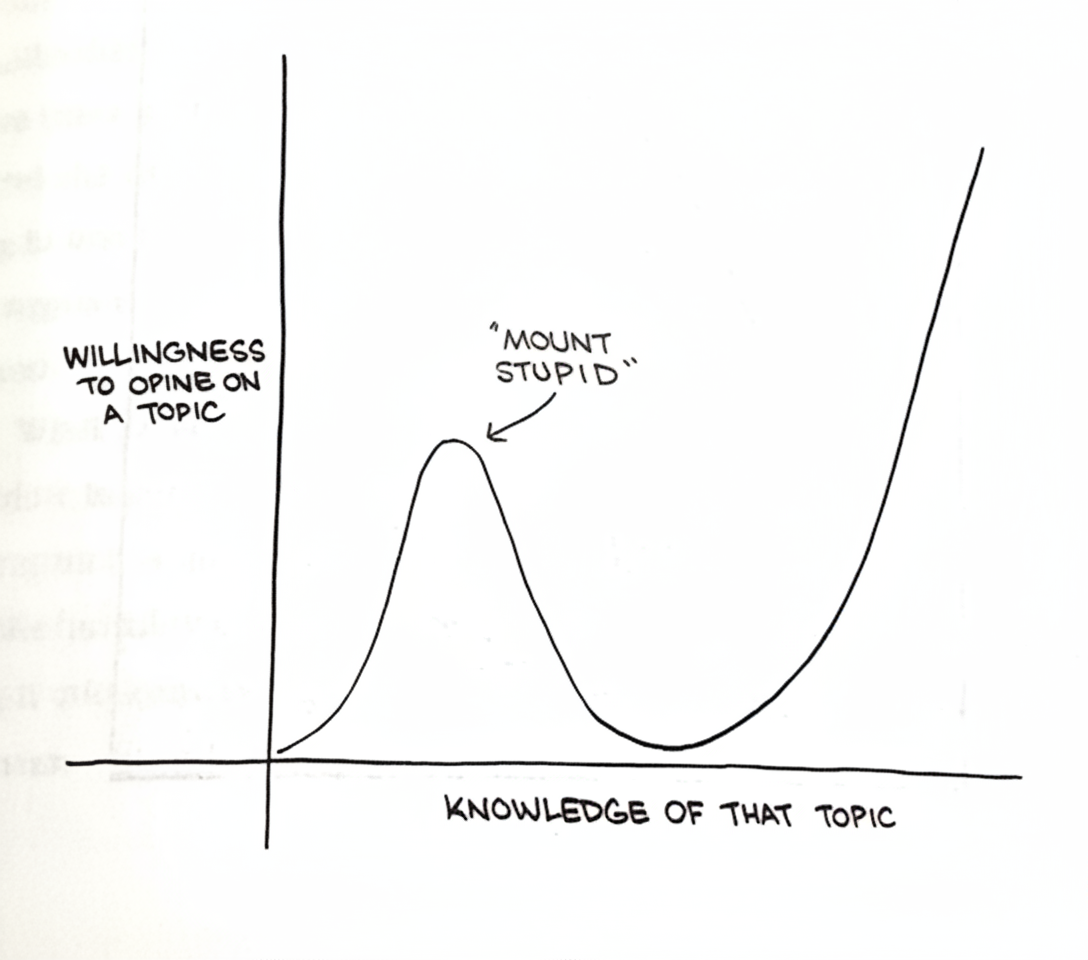
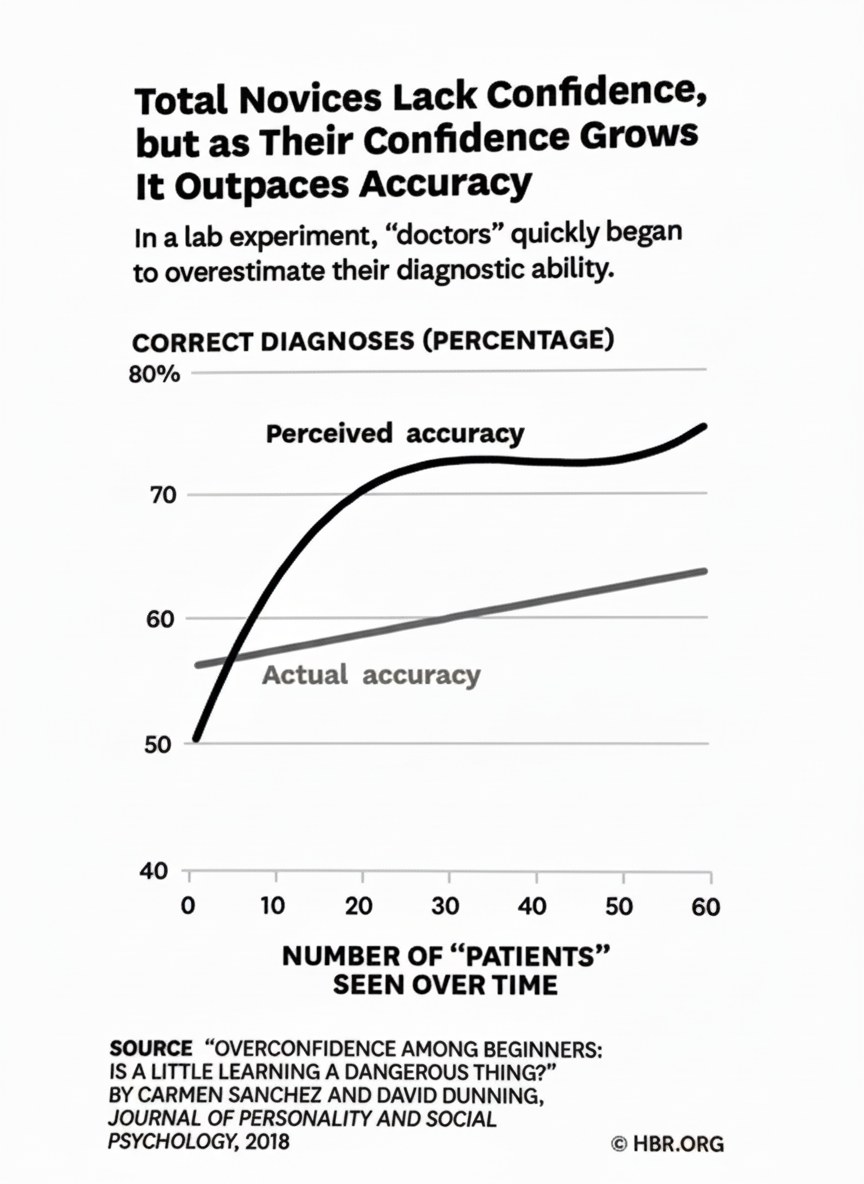
- Dunning-Kruger Effect: A psychological phenomenon describing the ignorance of arrogance. The Dunning-Kruger effect is the tendency to overestimate one's competence, and research shows that people are most likely to be overconfident when they are most ignorant. Knowledge breeds reservation.
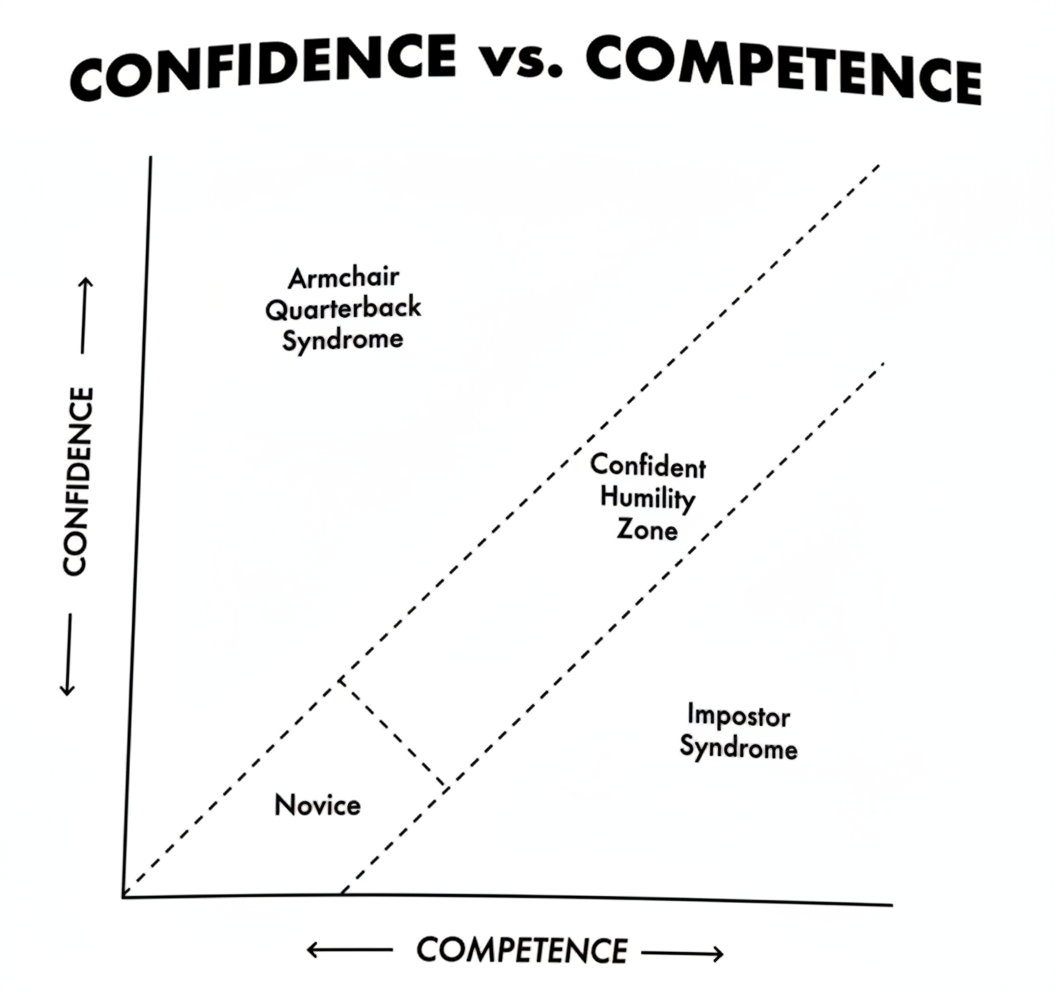
One thing that distinguishes the scientific mindset is that scientists find joy in being wrong. Discovering you were wrong means you are now less wrong than you were a moment ago. Unfortunately, most people not only get defensive and reject contradictory evidence outright, but they surround themselves with like-minded individuals who echo their existing beliefs—a habit that only entrenches them further. What sets a scientist apart is that they are not attached to their beliefs or ideas. They don't mind being wrong. In fact, they actively seek it out.
Forecasting tournaments are competitions where participants predict the outcomes of future events. They are judged on both the accuracy of their predictions and their calibration—how well they estimate the odds of being wrong.
The best forecasters have confidence in their predictions that come true and doubt in their predictions that prove false.
The single most important predictor of winning? How frequently participants updated and revised their beliefs.
Our culture does not explicitly value a scientific mindset in many areas of life, and being wrong is generally seen as a negative thing. But is it? Research shows that most people actually view the admission of error as a positive trait, not a negative one. The book gives an example of the British scientist Andrew Lyne, who made what he believed was a revolutionary astronomical discovery and was set to present it at a conference. Before he could present, he realized he had miscalculated and his discovery was invalid. He walked into the conference and candidly admitted his mistake. The confession was met with a standing ovation, and one astrophysicist called it "the most honorable thing I've ever seen."
Research goes a step further: studies show that people who take themselves less seriously—and consequently laugh at their own mistakes more often—are statistically happier. Not only are you viewed more positively by others, but you are also happier when you can get comfortable being wrong.
A significant cultural and psychological factor underlying the problem of being wrong is how people treat others who are wrong. The fundamental attribution error is the human tendency to overemphasize personality traits and underemphasize environmental or contextual factors when explaining others' behavior. In other words, we are deeply judgmental and blame people's character for their differing viewpoints rather than considering their life experiences or upbringing. Most people think "that person is just an idiot" instead of "I wonder what led them to that conclusion." The fundamental attribution error leads people to attack a person's character rather than engage with their ideas, which causes people on both sides to dig in their heels rather than examine whether their position is actually supported by evidence.
The author recommends that everyone maintain a trusted team of disagreeable people—people who will openly challenge your beliefs.
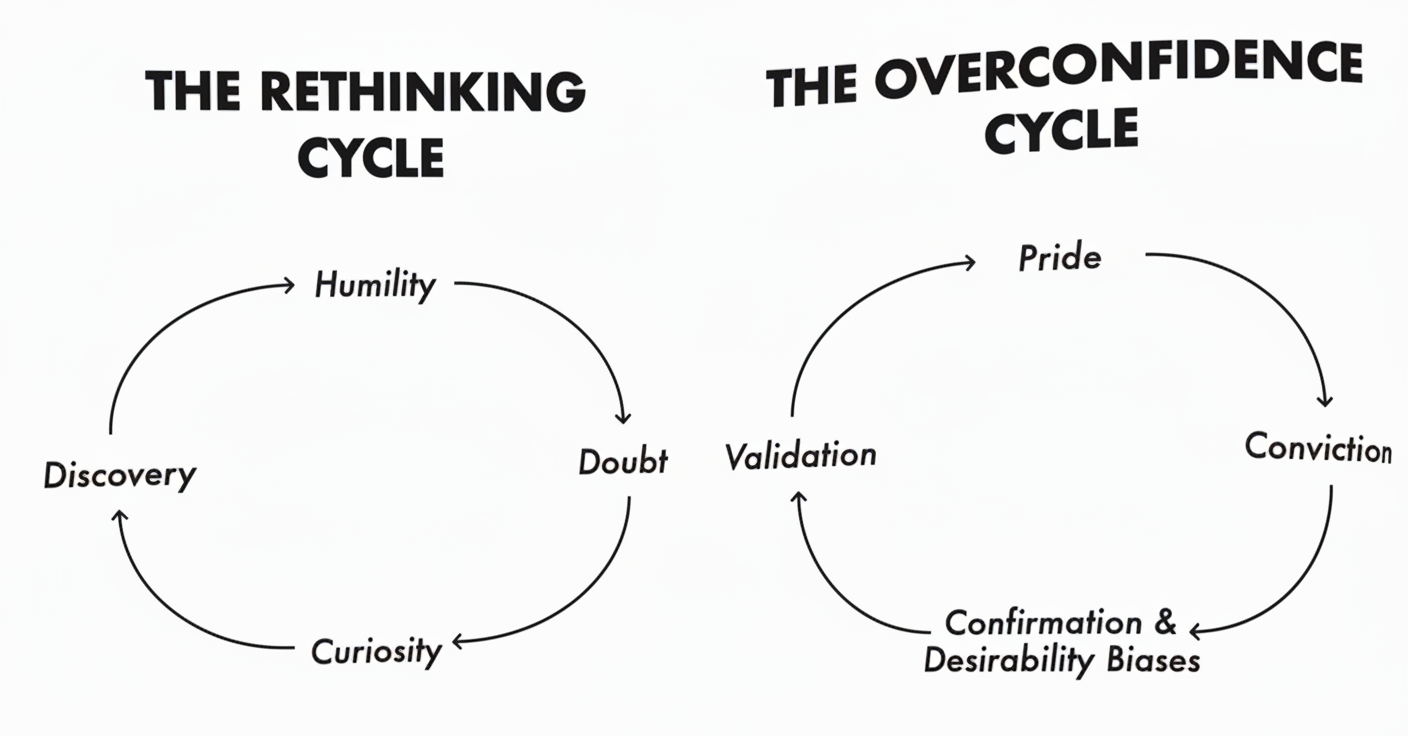
Their role is to activate rethinking cycles by pushing us to be humble about our expertise, doubt our knowledge, and be curious about new perspectives.
The book cites the invention of the airplane and the success of the movie The Incredibles as examples of how productive disagreement leads to breakthroughs. The Wright brothers argued constantly about how to make a plane work, but their disagreements were aimed at finding what worked—not at making each other feel stupid. The Incredibles was initially rejected because animation costs were prohibitively high using traditional techniques. Undeterred, the director assembled a team of disagreeable people to solve the problem, knowing they would challenge each other until a feasible solution emerged. The team revolutionized animation methods at a fraction of the cost, and the movie was a resounding success.
Disagreement doesn't have to mean dogmatically talking at someone or tearing them down. It can be intellectually stimulating and illuminating—if your self-esteem isn't threatened by the possibility of being wrong.
Part 2: Interpersonal Rethinking
How do people change others' minds? To answer this, Adam Grant analyzed expert negotiators and debaters to identify how they persuade others—and found five key commonalities.
Five Traits of Expert Persuaders
- They acknowledge good arguments, even from the opposition. Dismissing a valid point simply because the other side made it only reveals rigid bias. Expert persuaders do the opposite—they purposefully seek common ground from the start of a conversation.
- They prioritize the quality of arguments over the quantity. Weak arguments undermine their position, so every point is thoroughly vetted before any assertion is made. They recognize which of their own arguments are weak and why.
- They are neither offensive nor defensive in their attitude. Their stance is opinionated neutrality—they prove their point through facts, not bias. Facts speak for themselves, and attacking or defending a position signals a commitment to ego, not truth. Their worth is not on trial; their ideas are.
- They ask questions. They invite their opponent to examine their own stance rather than beating their opinions into the competition—which doesn't work.
- They share their feelings more openly. Feelings serve as a rough draft for experts. They share their emotional responses as a way of exploring their positions, recognizing initial bias, and rethinking their conclusions.
Psychologists have long found that the person most likely to persuade you to change your mind is you.
That said, facts alone aren't enough. Harish Natarajan, winner of 36 international debate tournaments, competed against an AI in a debate. While the audience said they learned more from the computer, they changed their opinions more based on Harish's arguments. The computer's loss was attributed to a critical gap in its analysis of 400 million data points of human argumentation: the ability to agree with the opposition. Dogmatism does not change minds. Furthermore, studies show that moderate confidence is more convincing than either high or low confidence.
You can lead a horse to water, but you can't make it think.
The Hierarchy of Arguments
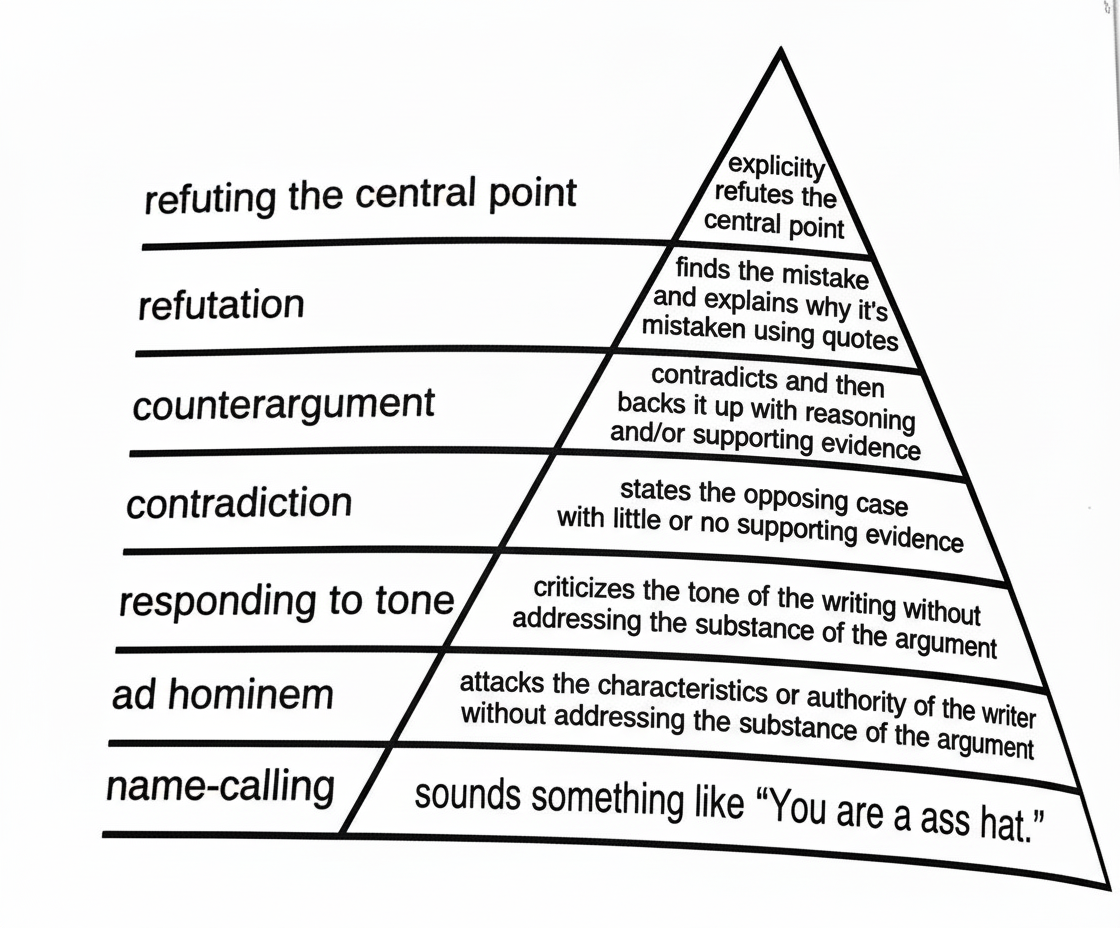
Daryl Davis is a black country musician who convinced over 200 KKK members to leave the organization. He was even made the godfather of one member he influenced—a former Imperial Wizard, the national leader of the KKK. How did he do it?
But first, how is prejudice formed?
How Prejudice Forms
- Group Polarization: The psychological phenomenon in which people's beliefs become more extreme when they discuss them with others who share the same views.
- Groupthink: A phenomenon that occurs when members of a group opt for consensus over critical thinking, often leading to irrational or detrimental outcomes.
In short, people become more entrenched in their opinions through mutual reinforcement and peer pressure. There are many other psychological factors at play in the formation of prejudice, but these two illustrate the core dynamic.
Adam Grant conducted several studies to identify how to reduce prejudice. He found that focusing on a common identity didn't work, nor did humanizing the other side—the humanized individual was simply deemed an exception to the prejudiced rule. What did work was getting people to reflect on the arbitrariness of their own position and examine what made their prejudice baseless. One particularly effective technique was having people consider how they might think differently if they had grown up under different circumstances.
People gain humility when they reflect on how different circumstances could have led them to different beliefs.
Psychologists have found that many of our beliefs are cultural truisms: widely shared, but rarely questioned. If we take a closer look at them, we often discover that they rest on shaky foundations.
Grant's findings underscore the importance of unlearning in order to avoid remaining ignorant.
"What doesn't sway us can make our beliefs stronger." In other words, when someone refuses to consider evidence against their belief, that incorrect belief becomes even more resistant to future contradicting evidence. This is a psychological principle called the backfire effect—perhaps better described as the doubling-down effect. The sunk cost fallacy in economics produces similar results. Psychologically, the average person would rather crash and burn defending an incorrect idea than accept an accurate one if it means confronting something they don't want to be true.
A great companion book on this topic is The Righteous Mind: Why Good People Are Divided by Politics and Religion by Jonathan Haidt. By studying tens of thousands of people, Haidt found that most people don't make decisions based on logic—even when they believe they do. The vast majority make decisions based on emotion, even when their position is undeniably proven wrong.
Psychologists find that people will ignore or even deny the existence of a problem if they're not fond of the solution.
Emotions drive behavior, not logic. We believe what we want to believe, not what is true—unless we learn to think like a scientist.
If presenting contrary evidence doesn't work, what does? The book recommends a therapy technique called Motivational Interviewing (MI), which has a 75–80% success rate at shifting a person's perspective. Core principles of MI include asking open-ended questions (not yes-or-no questions), engaging in reflective listening (listening to understand, not to convince, and checking for accurate understanding), and affirming a person's desire to change and capacity to grow. To use MI effectively, the practitioner's attitude matters enormously—effective MI requires empathy, nonjudgment, and attentiveness. Attempts to use MI manipulatively don't work statistically, as people can sense it.
The secret of MI is remarkably simple: genuine listening with no hidden agenda. Unfortunately, most people don't actually know how to listen—and overestimate how good they are at it.
Among managers rated as the worst listeners by their employees, 94% of them evaluated themselves as good or very good listeners.
In one poll, a third of women said their pets were better listeners than their partners.
Believing you are a good listener doesn't make it so—and based on these studies, truly good listening appears to be a rare skill.
A good listener's sole agenda is understanding the person they are listening to—something far harder than it sounds. Inverse charisma is a term that captures the magnetic quality of a truly good listener. The writer E. M. Forster was apparently one such listener; "in the words of one biographer, 'To speak with him was to be seduced by an inverse charisma, a sense of being listened to with such intensity that you had to be your most honest, sharpest, and best self.'" To put it simply: "listening is a way of offering others our scarcest, most precious gift: our attention."
So how did Daryl Davis do it? He listened. Davis didn't argue with KKK members or try to prove them wrong. He sat down with them, asked genuine questions, and listened without judgment or an agenda to convert. By treating them as human beings worthy of understanding rather than enemies to defeat, he created the conditions for them to question their own beliefs. He embodied every principle of effective persuasion outlined in this section: he acknowledged common ground, asked open-ended questions, stayed neither offensive nor defensive, and offered his attention as a gift. Over time, more than 200 members chose to leave the organization on their own—not because Davis convinced them they were wrong, but because he gave them the space to realize it themselves.
Part 3: Collective Rethinking
Another contributor to ignorance is a psychological principle called binary bias—"the human tendency to seek clarity and closure by simplifying a complex continuum into two categories." In other words, thinking in extremes and dividing people into two opposing camps (also known as black-and-white thinking) is illogical. We intentionally or unintentionally generate our own ignorance in order to avoid cognitive complexity.
How does one counteract bias born from intellectual laziness? By reintroducing complexity. Refusing to take cognitive shortcuts reduces bias—and therefore ignorance. Complexity can be increased by viewing any given idea as a spectrum rather than a binary, recognizing caveats, and highlighting contingencies in one's own opinions. Learning to question what we think we know is foundational to healthy thinking.
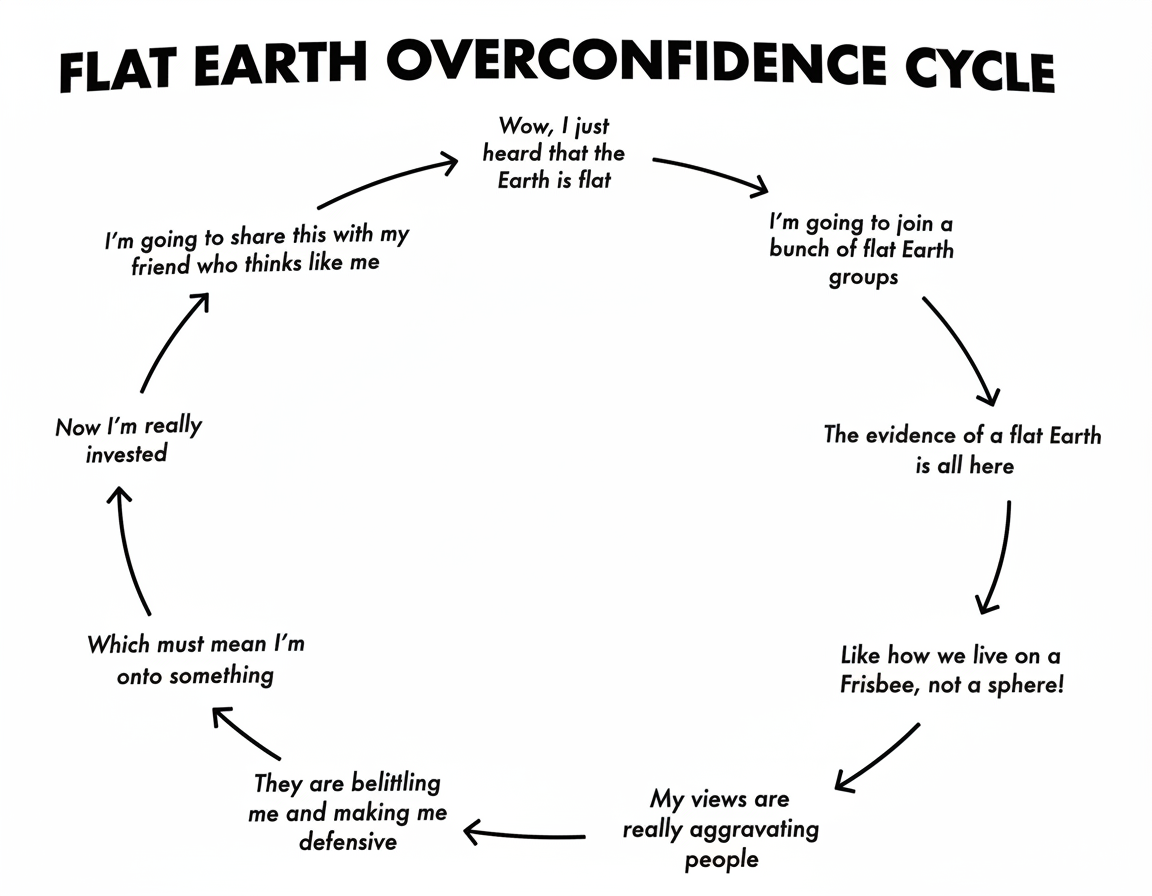
Most of us aren't taught to question what we are taught until college—if at all—despite how important it is. A simple exercise of reading older generations' school textbooks would be more than adequate to demonstrate that collective knowledge progresses with time, yet many of us fail to consider this when reevaluating our own knowledge. How we think at 10 should not be representative of how we think at 25, or how we think at 25 representative of how we think at 60.
Active learning is a method of teaching that teaches students how to learn—not merely how to read and regurgitate information. Most people prefer the passive approach to learning, likely due to its prevalence, despite its comparative ineffectiveness. One study found that students were 1.55 times more likely to fail a course with passive learning compared to active learning. The awestruck effect is a phenomenon in which people are less likely to critically evaluate a lecture when the speaker is eloquent, because they are swept up in the delivery. "Experiments have shown that when a speaker delivers an inspiring message, the audience scrutinizes the material less carefully and forgets more of the content—even while claiming to remember more of it." So not only are people more likely to accept false information unquestioningly, but they are also less likely to retain relevant information through passive learning. The solution? The same as before: be less cognitively lazy.
Active learning means thinking for oneself and applying knowledge. In group settings, this is accomplished through rigorous feedback on the quality of one's work or opinions, followed by integrating that feedback to produce an improved version. The cumulative impact of this cycle of rethinking and revision is that overall quality rises—sometimes dramatically. In active learning, "quality means rethinking, reworking, and polishing." In short, active learning teaches new ways of thinking, a quality that distinguishes a good teacher from a great one.
How can a culture of active learning be cultivated? The answer lies in creating psychological safety—the freedom to make mistakes without judgment or punishment. This allows errors to be corrected rather than hidden, preventing the cycle of repeating the same mistakes over and over. Expressing vulnerability about one's own mistakes also helps others learn that errors are a natural part of growth, not something to be ashamed of. Process accountability is the practice of evaluating how decisions are made throughout a process rather than focusing solely on the final product. Process accountability leads to deeper, more critical thinking and rethinking—a path that can only improve overall outcomes. Confident humility encapsulates the attitude of a healthy learning culture: confidence in one's ability and competency while recognizing that everyone, including oneself, makes mistakes and has room for improvement.
There is a fine line between heroic persistence and foolish stubbornness.
Rethinking prevents us from unwittingly engaging in foolish stubbornness. It is scientifically proven to produce better outcomes in virtually every area of life compared to rigid adherence and refusal to reconsider. There is immense value in routinely questioning one's beliefs and updating one's understanding when new evidence emerges. The alternative—refusing to change one's position—is a direct result of insufficient emotional maturity and self-esteem. Without the willingness to sit with uncomfortable truths, genuine growth remains out of reach.
The book closes by discussing how happiness is attained—and it's not by valuing happiness more. Echoing what I've learned over years of helping clients find inner peace, the author asserts that happiness is found through the development of self-esteem—the same quality that opens people up to truth and reduces bias. Rethinking doesn't just apply to concepts and ideas; it applies to how you think about yourself. Learn to define yourself by your values, not your opinions.
Conclusion
There are many salient points made in this book, but if I had to highlight just one it would be this: whenever you think you know something, stop and ask yourself the question "how could I be wrong?"