
Humanistic Psychology
In-Depth Explanation
In-Depth Explanation
Humanistic Psychology
Humanistic Psychology is less a specific theory and more an overarching perspective—a way of being with clients that influences everything a therapist does. Generally attributed to Carl Rogers (with Abraham Maslow as another key contributor), this approach emphasizes the qualities of the therapist and the nature of the therapeutic relationship. At its core: people are inherently good, capable of growth, and deserve to be treated with genuine warmth and respect.
Unconditional Positive Regard
Perhaps the most important concept in humanistic psychology: unconditional acceptance and support toward the client, 100% of the time, no matter what.
What It Means:
- Deep and genuine care for the person as they are
- Acceptance isn't contingent on the person changing or behaving a certain way
- The person's inherent worth is never in question
- Care continues even when you disagree with their choices
Why It Matters: When people feel truly accepted, they become more open to self-exploration and change. Paradoxically, acceptance often precedes transformation.
Real-Life Application: Practice offering unconditional positive regard to yourself. Can you accept yourself fully—including your flaws and mistakes—while still working toward growth?
Core Principles of Humanistic Psychology
Nonjudgmental Attitude
Not judging the client for any action, even if it goes against your personal belief system. No one likes being judged—and judgment shuts down openness and trust.
Empathy
Seeking to share in the client's emotions and experience them together. Empathy is experiencing the emotion simultaneously with them; sympathy is feeling sorry for them but staying emotionally distant.
Innate Goodness
People are assumed to be inherently good and doing their best at any given moment. Even harmful behavior usually stems from unmet needs or limited options, not malice.
Free Will
Everyone has the choice and right to live their life as they choose, as long as it doesn't harm others. No attempt is made to control clients' choices.
Maslow's Hierarchy of Needs
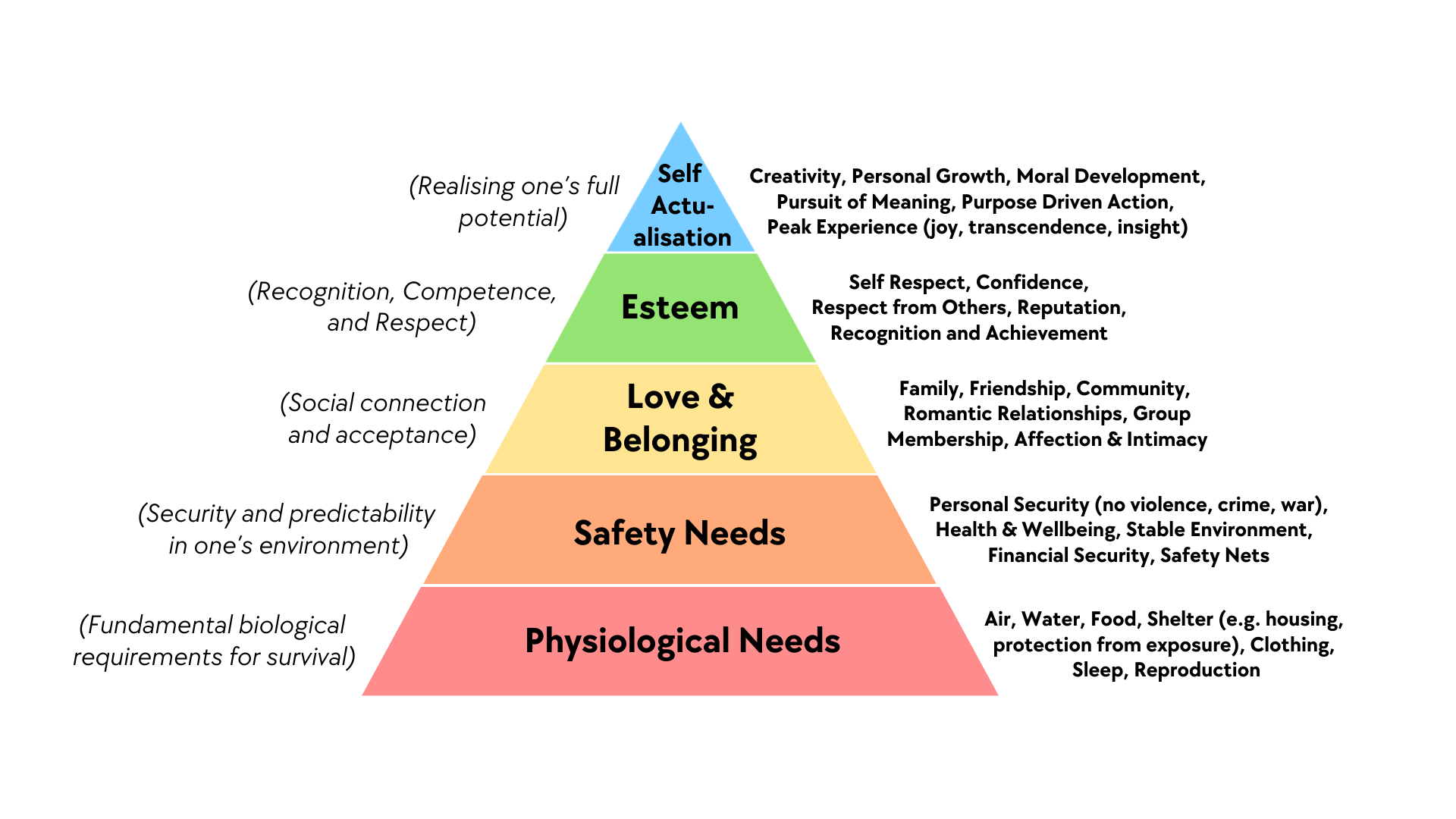
Abraham Maslow proposed that human needs form a hierarchy—lower-level needs must generally be met before higher-level needs become primary concerns.
Click to enlarge
The Levels (bottom to top):
• Physiological: Food, water, shelter, sleep—basic survival needs
• Safety: Security, stability, freedom from fear
• Love/Belonging: Relationships, connection, community
• Esteem: Self-respect, recognition, confidence
• Self-Actualization: Becoming your best self
Real-Life Application: When struggling with "higher" concerns like purpose or self-improvement, check if your basic needs are being met. Sometimes addressing physiological or safety needs first makes everything else easier.
Self-Actualization
Self-actualization is the act of becoming the best version of yourself. It sits at the top of Maslow's hierarchy—the ultimate human goal.
What It Includes:
- Feeling you're living to the best of your ability in all aspects of life
- Alignment between who you are and your "ideal self"
- A sense that your life has meaning and purpose
- Actively working toward or achieving your potential
- Authenticity—being true to yourself
Key Insight: Self-actualization isn't a destination but a process. It's about ongoing growth, not achieving perfection.
Real-Life Application: Reflect on the gap between who you are and who you want to be. What small step could bring you closer to your "ideal self" today?
The Strengths-Based Approach
A concurrent aspect of humanistic psychology is the strengths-based model. Rather than focusing on problems and deficits, this approach focuses on strengths and seeks to empower people by emphasizing them.
Key Principles:
• Avoid Labeling: Don't place people in boxes or categories that limit their perceived ability to change
• View Client as Equal: The relationship is collaborative, not hierarchical
• Assume the Best: People are doing their best with what they have
• Draw on Past Successes: Use previous wins and exceptions to fuel change
Example: Instead of "What's wrong with you?" the question becomes "What's strong in you? What has worked before? How can we build on that?"
Real-Life Application: When facing a challenge, inventory your strengths and past successes first. You've overcome difficulties before—what resources and capabilities did you use?
Person-Centered Therapy
Carl Rogers developed Person-Centered Therapy (also called Client-Centered Therapy) as the practical application of humanistic principles:
The Core Conditions: Rogers identified three conditions that are necessary and sufficient for therapeutic change:
- Unconditional Positive Regard: Complete acceptance of the person
- Empathy: Deep understanding of the person's experience
- Congruence: The therapist being genuine and authentic
Non-Directive Approach: The therapist doesn't direct, advise, or interpret. Instead, they create conditions where the person can discover their own insights and solutions.
The Actualizing Tendency: Rogers believed every person has an innate drive toward growth and health. Given the right conditions, people will naturally move toward their potential.
Putting It All Together
Humanistic Psychology offers a foundational framework for helping and healing:
• People are inherently good and capable of growth
• Unconditional positive regard creates conditions for change
• Empathy and genuine presence are healing in themselves
• Basic needs must be met before higher growth is possible
• Self-actualization is the ultimate human potential
• Focusing on strengths is more empowering than focusing on deficits
The Path Forward: Whether you're helping others or working on yourself, the humanistic approach reminds us: accept people as they are, believe in their capacity for growth, meet them with empathy and genuineness, and trust in the human drive toward becoming one's best self.
Rate This Theory
All ratings are anonymous
Help others by sharing