Bilateral Stimulation
Psychological Concepts
Bilateral Stimulation
Bilateral stimulation refers to the rhythmic, alternating activation of the left and right hemispheres of the brain through visual, tactile, or auditory input. Originally identified as the core mechanism of Eye Movement Desensitization and Reprocessing (EMDR), bilateral stimulation has since been recognized as a versatile processing enhancer applicable across a wide range of therapeutic approaches (Shapiro, 2001).
The technique works by facilitating interhemispheric communication — the transfer of information between the brain's two hemispheres — which appears to accelerate the processing and integration of emotionally charged material. Research suggests that this alternating stimulation activates the brain's natural memory reconsolidation processes, allowing distressing memories and beliefs to be "unlocked," reprocessed, and stored in a less emotionally disruptive form (Stickgold, 2002).
Bilateral stimulation is not limited to trauma processing. It can enhance any form of psychological work — cognitive reframing, somatic processing, belief restructuring, emotional regulation — by reducing the emotional intensity of the material being processed and facilitating deeper integration between cognitive understanding and felt experience.
Why This Matters
Bilateral stimulation can be applied during any healing method or emotional processing exercise to increase its effectiveness. The three modalities below can be used interchangeably based on personal preference and context:
Visual Bilateral Stimulation
Visual bilateral stimulation is performed by moving the eyes horizontally from left to right in a steady, rhythmic pattern. This is typically guided by following a moving object on a screen, a light bar, or a therapist's hand, though it can also be performed independently. The key requirement is smooth, sustained lateral eye movement at a pace that feels comfortable — generally one full left-right cycle per second. Here is a free guided video that can be used for visual bilateral stimulation during processing exercises.
Tactile Bilateral Stimulation
Tactile bilateral stimulation is performed by alternating physical contact between the left and right sides of the body. The most common method involves resting the hands on the thighs and tapping alternately — left, right, left, right — at a steady rhythm. This can also be performed by tapping the arms, knees, feet, or any bilateral body surface. The essential requirement is consistent alternation between left and right sides at a comfortable, rhythmic pace. Tactile stimulation is often preferred during exercises where closing the eyes enhances the processing experience.
Auditory Bilateral Stimulation
Auditory bilateral stimulation is performed by listening to sounds that alternate between the left and right ears through headphones or earbuds. The content of the sound is less important than the alternation pattern — purpose-designed bilateral audio tracks, nature sounds, or even music can be used, provided the sound source alternates fully between ears. Searching for "bilateral stimulation audio" or "EMDR bilateral sounds" will produce a variety of freely available options. Auditory stimulation is particularly useful when both hands are occupied (such as during journaling) or when visual stimulation feels distracting.
The Neuroscience of Bilateral Stimulation
The therapeutic mechanism of bilateral stimulation involves the rhythmic activation of alternating cerebral hemispheres. At a fundamental level, information processing in the nervous system follows wave-like patterns. The diagram below illustrates the basic structure of a wave — the crest (peak) and trough (valley) that constitute one complete wavelength, representing the smallest discrete unit of oscillatory information.
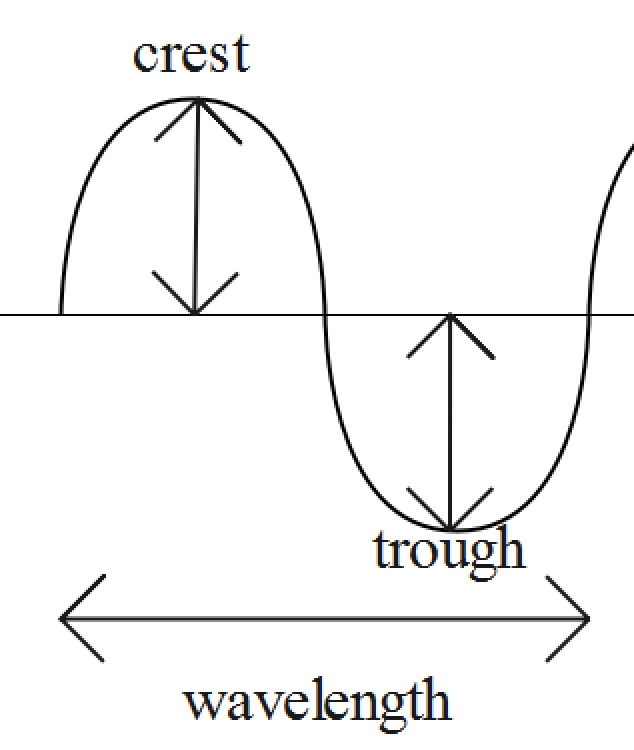
When this wave model is mapped onto the brain's bilateral architecture — with the crest corresponding to left-hemisphere activation and the trough to right-hemisphere activation — bilateral stimulation effectively generates complete processing cycles. Each alternating left-right activation creates one full wavelength of neural processing, breaking complex emotional and cognitive material into discrete units that the brain can integrate more efficiently. This is consistent with Propper and Christman's (2008) findings that bilateral eye movements enhance episodic memory retrieval by increasing interhemispheric interaction, and with Stickgold's (2002) hypothesis that bilateral stimulation activates the same neural mechanisms involved in REM sleep — the brain's natural system for memory consolidation and emotional processing.