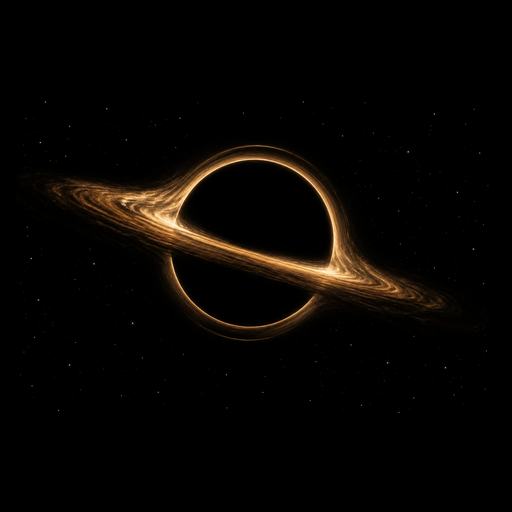
Causal Geometry: How Physical Form Organizes Energy
Love's Curriculum: The Growth Of Consciousness / Paper Seven
Causal Geometry: How Physical Form Organizes Energy

1. From Energetic Direction to Causal Geometry
The first five works of Love's Curriculum progressively move the same relational idea through different surfaces. Recursive Decoding: The Conscious Acceleration of Awareness establishes that learning accelerates when awareness identifies relationships that survive changes in surface form and can therefore be reused [1]. Decoding Reality: The Keys of Consciousness then proposes that symbols, states, geometries, environments, and bodily conditions can function as keys when they change what consciousness can recognize, access, integrate, or sustain [2]. Defining Consciousness: The Experiences Within Quantum Organization gives those keys a physical target: an organized, environmentally open system whose conscious state changes when relationships among its processes change [3]. The Sword of Truth: The Power of Resonant Words shows how a precisely organized symbolic form can make an implicit relationship consciously recognizable [4]. The Language of Energy: How the Body Uses Symbology to Heal then reverses the direction. The body can discover a useful state transition before the mind can explain it, preserve that transition as routine, and later compress its recurring direction into symbolic language such as containment, expansion, flow, rhythm, release, elevation, descent, grounding, and connection [5].
The final section of The Language of Energy leaves a specific question open: if the body already recognizes these directional transformations, can some of them be deliberately instantiated through physical shape? Causal Geometry begins exactly there. Its claim is not merely that geometry can represent a relationship. The stronger proposal is that geometry can physically impose relationships on the processes moving through it. A boundary constrains. A curve redirects. A narrowing gathers. A widening distributes. A crossing creates a shared region. A repeated structure selects recurring possibilities. Before any observer decides what those forms symbolize, the spatial relationships are already doing something.
This changes the status of geometry inside the curriculum. In the earlier papers, geometry appears primarily as a translation surface and a possible key of consciousness. Here it becomes a causal variable. A shape can still function symbolically, culturally, or psychologically, but those layers may sometimes be built upon a more basic fact: the form itself changes the organization of the physical system in which it is instantiated.
2. When Geometry Becomes Part of the Mechanism
The Sword of Truth distinguishes between a symbol and the relationship a symbol allows consciousness to recognize. The word water is not wet, and the sentence describing a survival belief is not identical to the emotional learning it reveals [4]. Causal Geometry introduces a different case. Some forms do not merely point toward a relationship. They physically create it. A funnel does not only symbolize concentration; its narrowing changes the available pathways of whatever moves through it. A closed vessel does not only symbolize containment; its boundary separates an interior from an exterior. A branch does not merely depict differentiation; one path becomes several. A bend does not merely suggest redirection; direction actually changes.
This does not make symbolism irrelevant. One form can operate at several levels at once. A circle can be culturally associated with unity, consciously interpreted as continuity, and physically function as a closed boundary or recurrent path. The important distinction is between representational action and structural action. Representational action depends on a decoder recognizing what the form stands for. Structural action occurs because the spatial relation itself changes the physical conditions under which a process unfolds.
The word energy also changes level in this paper. The Language of Energy uses energetic language primarily as a phenomenological compression of directional state change: held to moving, diffuse to localized, constrained to open, separate to connected [5]. Causal Geometry does not convert all of those experiences into one hidden physical field. Here physical energy refers to ordinary energetic processes already described by science - electromagnetic energy, mechanical energy, thermal transport, fluid motion, waves, stress, and other state-bearing physical activity. The proposal is that geometry can reorganize those processes, while the organism may later experience and name the resulting direction at a higher symbolic level.
physical organization -> state change -> experienced direction -> symbolic energy
3. Geometry Is Already a Causal Variable in Physics
Modern physics and engineering already depend on the fact that spatial arrangement changes behavior. Resonant cavities provide one clean example. Conventional cavities support resonant frequencies that depend on their geometry; Liberal, Mahmoud, and Engheta's demonstration of geometry-invariant resonant cavities was notable precisely because ordinary cavities are geometry-dependent [6]. The material inside a resonator does not have to change for its allowable modes to change. Altering the boundary can alter which states the system supports.
Mechanical metamaterials make the same principle visible in matter. Their unusual behavior often comes not from an exotic chemical composition but from the architecture imposed on ordinary material. Geometry can govern stiffness, buckling, deformation pathways, waveguiding, and shape change [7,8]. Transformation optics makes the point even more directly: spatial design can redirect electromagnetic fields in carefully specified ways [9]. Related transformation methods have been extended to diffusion, where metamaterials can manipulate the transport of heat, particles, and plasma through operations including cloaking, rotation, and convergence or concentration [10,11].
Curved flow provides an equally concrete example. Fluid moving through spiral microchannels develops curvature-dependent secondary motion because the channel geometry reorganizes pressure and momentum [12]. The fluid has not become a new substance. The walls have changed the relations under which the same fluid moves. The recurring principle is therefore not mysterious: change the spatial constraints and the physical state space changes with them.
A coil makes the distinction especially intuitive. Coiling copper does not increase the conductivity of copper. The material remains the same. What changes is the current path: neighboring turns repeatedly link magnetic flux, changing inductance and the surrounding magnetic organization relative to a straight conductor [13]. The power belongs neither to a magical spiral nor to the material alone. It belongs to the relationship created when the material is arranged into that form.
4. From Invariant Relationships to Geometric Operators
Recursive Decoding calls a relationship invariant when its organization remains recognizable after the material or representation changes [1]. A melody can survive translation from piano to violin because the relational pattern among the notes survives even though the sound-producing substrate changes. Causal Geometry asks whether certain geometric operations form a physically causal class of such invariants.
Universality must therefore be defined at the level of operation rather than identical output. A spiral conductor, a spiral fluid channel, a spiral shell, and a spiraling movement do not obey one equation. Copper carries current, fluid carries momentum, biological tissue actively contracts, and a living organism senses what it is doing. Yet the same spatial relation can recur: continuous rotation combined with progression and repeated proximity among different portions of a path. The substrate determines how that relation is expressed; the geometry determines part of what relation is imposed.
This is why cross-domain engineering matters so much to the theory. Electromagnetic metamaterials, mechanical metamaterials, thermal metamaterials, diffusion metamaterials, and fluidic structures are not evidence that one hidden energy behaves identically everywhere. They show something more useful: spatial transformations can remain meaningful even when the physical language changes [7-12]. The geometry supplies a transformation rule; the substrate supplies the manifestation.
Causal Geometry therefore proposes a limited set of substrate-translatable operators: closure, opening, convergence, divergence, curvature, folding, rotation, translation, intersection, branching, symmetry, symmetry breaking, periodicity, and hierarchy. These are not mystical definitions assigned to shapes. They are spatial relationships that can recur wherever a physical system has paths, boundaries, directions, scales, or fields to organize.
The energy changes language; the geometry keeps the grammar.
5. When Energetic Direction Has a Geometric Backbone
The Language of Energy identifies symbolic energies by the recurring direction of a state transition rather than by one fixed activity [5]. Causal Geometry now sharpens that model: some of those directions have an obvious geometric backbone. Containment is closely related to enclosure and boundary. Expansion involves increased separation, occupied space, or divergence. Connection can involve convergence, contact, or intersection. Separation increases distance or breaks a shared pathway. Rhythm is periodicity through time. Elevation and descent are translations relative to gravity. Order can be carried by symmetry, repetition, alignment, or hierarchy. Disruption can be produced through abrupt redirection, discontinuity, or symmetry breaking.
The connection should not be forced farther than it goes. Cleansing is not fundamentally a geometric operation; water, temperature, tactile saturation, conductivity, and contextual transition do much of the work described in the preceding paper. Warmth and coolness are thermal. Light and darkness depend on illumination. Grounding includes contact, load, support, proprioception, and sometimes electrical coupling; geometry contributes through base, orientation, and center of mass, but the entire function cannot be reduced to shape. The theory becomes stronger, not weaker, when it distinguishes the energetic directions that are geometric from those that depend primarily on other mechanisms.
The important discovery is therefore not that every energetic word secretly means a shape. It is that several of the most basic directional terms humans use - open, closed, centered, scattered, converging, separating, rising, falling, turning, repeating, crossing, surrounding - are already descriptions of spatial operations. Symbolic language may sometimes arise because consciousness is naming what physical relationship felt like from inside a living system.
| Energetic direction | Geometric backbone |
|---|---|
| Containment | closure, enclosure, concavity, bounded interior |
| Expansion | opening, divergence, increasing separation or occupied extent |
| Flow | continuous progression, curvature, uninterrupted directional change |
| Rhythm | periodicity or repeated transition through space or time |
| Connection | convergence, contact, intersection, shared region |
| Separation | divergence, increasing distance, discontinuity |
| Elevation / Descent | translation relative to an external field such as gravity |
| Order | alignment, symmetry, periodicity, hierarchy |
| Disruption | abrupt redirection, discontinuity, symmetry breaking |
| Grounding | partly geometric through base, support, orientation, and lowered position; not geometry alone |
6. The Primitive Operations of Form
The most useful vocabulary is not a catalog of famous shapes. Recognizable figures such as triangles, squares, pyramids, mandalas, and lotuses are usually compounds built from simpler relationships. Causal Geometry therefore begins with operations that can be identified before a form is given a cultural name.
A straight axis preserves direction and provides a reference against which deviation can be measured. Parallelism preserves alignment while maintaining separation. Folding or bending changes direction at a joint or vertex; curvature spreads that redirection continuously across space. Concavity turns structure toward an interior region, while convexity presents structure outward. Closure creates an inside and outside; opening interrupts that boundary. Convergence decreases spatial separation toward a shared region, while divergence increases it. Rotation changes orientation around an axis. Translation moves a form along an axis without requiring rotation. Intersection creates a common region among previously separate paths. Branching turns one path into several, or several into one when the direction is reversed. Symmetry creates equivalence under a transformation; symmetry breaking removes that equivalence. Periodicity repeats a relation. Hierarchy places organized relations inside larger organized relations.
Movement adds dynamic pairs to the same vocabulary: opening and closing, folding and unfolding, converging and diverging, rising and descending, twisting and untwisting, crossing and uncrossing, expanding and contracting. A static pose captures one configuration. Movement reveals the operator that produced it. For embodied practice, the transformation can therefore be more informative than the final silhouette.
7. Curvature, Convergence, Divergence, and Sharpness
Convergence and divergence make the causal character of geometry easy to see. A narrowing transforms a broader spatial distribution toward a smaller region; a widening reverses that relation. In nozzle flow, progressive changes in cross-sectional area alter pressure, velocity, density, and temperature, with the realized effect depending on the flow regime and direction of travel [14]. The same taper can therefore function as convergence in one direction and divergence in the other. Direction through a form is part of the operation.
Curvature introduces continuous redirection. Spiral microchannels generate secondary Dean motion because the path continually bends the flow [12]. Living systems can also detect curvature directly. Reviews of micron-scale curvature sensing describe cells responding to curved environments through changes that include reorientation of cell bodies, actin fibres and nuclei, as well as changes in transcriptional programs [15,16]. This matters because it shows that geometry can become biologically consequential before conscious symbolic interpretation enters the picture.
Sharpness changes how quickly direction changes over space. Mechanical notches and re-entrant corners can produce large local stress concentrations [17]. In electrostatic and field-emission systems, the geometry of sharp emitter tips can increase local electric-field enhancement near the apex [18]. The defensible invariant is not that an acute angle universally means intensity. It is that a large geometric change compressed into a small region can generate strong local gradients in systems whose governing physics responds to that geometry.
Angle should therefore be treated as a modifier rather than a separate universal word. A bend is the operator; the angle specifies how much redirection or folding has occurred. An acute bend, right-angle bend, and obtuse bend differ in degree and abruptness, but they belong to the same family of spatial change.
8. Closure, Opening, Partial Enclosure, and Compound Boundaries
Closure creates one of geometry's most basic distinctions: inside and outside. Once a continuous boundary exists, exchange must occur through the conditions permitted by that boundary. Resonant cavities demonstrate that the dimensions and form of enclosure can determine allowed modes [6]. Current loops and toroidal arrangements show another kind of closure, where the path of current changes the organization of the magnetic field [13]. Closure therefore does not produce one universal effect, but it repeatedly creates bounded recurrence and interior-exterior distinction.
Opening reverses part of that relation. A closed loop and a nearly closed loop can look visually similar while differing structurally because one contains a continuous boundary and the other preserves a gap. This makes the U-shape or cup especially informative. It combines curvature, an interior-facing boundary, and partial enclosure while leaving exchange possible. It is neither simply open nor fully closed.
Compound shapes can now be decoded without pretending each one is a primitive law. A circle combines closure, recurrence, and rotational symmetry. An oval preserves closure while introducing an axis and unequal curvature. A triangle combines closure, three vertices, directional edges, and - when equilateral - threefold symmetry. A square combines closure, parallelism, repeated right-angle redirection, and fourfold organization. A cone or taper combines radial symmetry with progressive convergence or divergence. The compound form matters, but its behavior can be understood more precisely by identifying which operators it combines.
9. Rotation, Spiral, Helix, Wave, and Recurrence
Rotation becomes especially informative when it is combined with progression. A circle can recur without approaching or leaving a center. A spiral rotates while progressing radially inward or outward. A helix rotates while translating along an axis. These are visually related forms, but they encode different spatial instructions.
The coil illustrates how repeated turning changes an electromagnetic system. Its significance does not come from the claim that spirals generate an undefined universal energy. Repeated turns repeatedly alter the relationship among different portions of the current path, increasing magnetic flux linkage and inductance [13]. Spiral channels reorganize flow through continuous curvature [12]. Across the two systems, the exact physics differs while a relational feature survives: progression occurs through repeated redirection and repeated spatial proximity.
The helix adds handedness. Left- and right-handed forms are not equivalent in systems capable of distinguishing chirality. Helical antennas use three-dimensional winding geometry to support circularly polarized radiation under appropriate dimensional conditions [19]. Optical experiments with left- and right-handed silver nanohelices likewise show a chiroptical response that reverses with helix handedness [20]. This gives the theory an important correction: clockwise and counterclockwise are viewpoint-dependent descriptions, while chirality is a structural relation that can remain physically meaningful after viewpoint changes.
The wave adds periodic alternation. In photonic crystals, periodic spatial structure can create bandgaps that permit some modes while suppressing others [21,22]. Repetition is therefore not inert duplication. Repeating a spatial constraint can change which states persist. In embodied movement, rocking, cyclic breathing, repeated reaching, and oscillatory twisting add a temporal geometric layer to the body's static form.
The figure eight combines two recurrent loops through a shared central region. Figure-eight coils used in transcranial magnetic stimulation produce more focal induced fields than simple circular coils because the paired loops reorganize field addition near their junction [23]. The result does not establish one universal meaning for the lemniscate, but it demonstrates the larger principle: combining simple operators can create a new system-level effect.
10. Intersection, Branching, Symmetry, and Hierarchy
Intersection creates a shared region. Paths that were previously separate become capable of interaction once they occupy the same spatial region. Depending on the substrate, the result may be mixing, transfer, collision, scattering, interference, coupling, or simply contact. The invariant is the newly created opportunity for exchange.
Branching performs a different operation: one pathway becomes several, or several converge into one when direction is reversed. Branched transport networks make the physical consequences of this geometry clear. In vascular bifurcations, Murray-type relationships connect parent and daughter vessel dimensions with flow and energetic cost [26]. The branch does not guarantee one distribution ratio, but it establishes the one-to-many relation from which distribution becomes possible.
Symmetry reaches still deeper because it constrains equivalence. In many physical systems, symmetry generates selection rules that restrict which responses are allowed, while symmetry breaking can alter optical, electrical, magnetic, and topological behavior [24,25]. The geometric meaning of symmetry is therefore more exact than saying that symmetry means balance. Symmetry makes specified positions equivalent under a transformation; breaking it gives them different roles.
Hierarchy adds organization across scale. Recent review of hierarchical and fractal-inspired mechanical metamaterials describes geometry coupling deformation across length scales, allowing local deformations to influence global response and vice versa [27]. Periodicity repeats a relation at a common scale; hierarchy embeds relations within relations across scale. A form can therefore contain smaller forms whose local operations participate in the behavior of the larger whole. This is the geometric version of a recurring principle throughout Love's Curriculum: a whole can become one part inside a larger organization.
11. Geometry Has Modifiers, Not Just Forms
A serious geometric language cannot be built from shape names alone. The same operator can produce different outcomes when its angle, proportion, scale, orientation, direction, rate, handedness, or substrate changes. These variables are not exceptions to Causal Geometry. They are grammar.
Angle specifies the amount and abruptness of redirection. Ratio and proportion specify relationships among dimensions and can alter resonance, stress, and transport. Scale determines which wavelengths, structural lengths, or material effects strongly interact with a form. Orientation places geometry inside a larger reference field. Up and down are not intrinsic properties of an isolated mathematical shape; gravity makes them physically different for an organism standing on Earth. Direction of traversal can reverse an operation, as in inward versus outward spiraling or branching versus merging. Handedness distinguishes mirror-related three-dimensional structures. Rate separates a static configuration from slow transformation, rapid movement, and oscillation. Substrate determines whether the geometric operation appears as stress, heat flow, electromagnetic behavior, fluid motion, tissue deformation, or another process.
This also clarifies why one final posture can be physically different when reached through different sequences. Slowly opening the arms, abruptly throwing them open, and holding them open for several minutes can pass through similar endpoint geometry while generating different histories of acceleration, muscular recruitment, breathing, sensory input, and prediction. Static form, path, rate, and repetition are distinct variables that can combine into one embodied instruction.
12. The Body Does Not Only Represent Geometry; It Instantiates It
The body is where the earlier papers' symbolic and physical layers finally meet. A posture can be a cultural symbol, a learned psychological expression, a mechanical arrangement, a sensory condition, and a geometric structure at the same time. Causal Geometry isolates the geometric part before later theories add body-region meaning.
When a person bends, the body really changes direction. When the arms open, distances and occupied space increase. When the hands meet, separate structures converge and contact. When the body twists, segments rotate around an axis. When a person lowers toward the floor, the body's organization changes relative to gravity and support. These are not metaphors imposed after the fact. They are physical relationships being created inside a living system already carrying mechanical forces, electrical activity, fluid transport, respiration, tissue tension, proprioceptive signals, and continuous regulation.
Research on posture and movement establishes the modest but important foundation that configuration can participate in human state. Movement characteristics have been associated experimentally with different emotional responses, and recent postural-feedback work found that measurable physical variables such as neck flexion and perceived difficulty contribute to emotional effects [28,29]. These findings do not establish one universal psychological meaning for a geometric operator. They establish something Causal Geometry requires before making its larger proposal: changing bodily form can change the state of the organism.
The stronger theoretical step is to ask whether some of those state changes can be organized more coherently by the geometry the body instantiates. Cells can respond to curvature [15,16]. The whole organism senses angle, support, orientation, load, contact, movement, and balance continuously. No verbal interpretation is required before those relations become biological information.
13. Yoga and Movement Become Applications of a Larger Principle
Yoga becomes more interesting when it is no longer asked to carry the entire theory. It is one historical practice in which people deliberately construct precise bodily forms, maintain them, transition among them, coordinate them with breathing, and repeat them over time. The same geometric framework can apply to martial arts, tai chi, dance, prayer, prostration, mudras, stretching, therapeutic movement, ritual gesture, and spontaneous posture.
The geometry-first description of a movement should therefore come before a symbolic interpretation. Which axes extend? Which structures fold? What converges or diverges? Where are the open and closed curves? Is the whole form symmetrical or differentiated? Does the sequence rise, descend, rotate, cross, spiral, open, close, or reverse? Which relationships are maintained while others change? These questions identify the spatial operation itself.
Causal Geometry deliberately stops before assigning detailed psychological meanings to individual body regions. The same angle at an elbow and knee does not create identical biomechanics, function, or lived meaning. The operator can be shared while the anatomical substrate changes the manifestation. That distinction belongs to the next paper, where geometry is combined with anatomy, support, contact, side, sequence, and psychological metaphor.
This boundary also clarifies why precision in a movement tradition could matter without assuming that every inherited instruction is scientifically optimal. If form changes mechanics, sensory input, orientation, and other physical relations, then small changes in angle, sequence, direction, or symmetry can alter what the body is actually doing. Exact form is therefore a plausible causal variable, not merely a visual standard.
14. Sacred Geometry and Ritual as Preserved Operations
Decoding Reality proposes that religious and traditional systems may preserve compressed relational knowledge after the original explanatory language changes or is lost [2]. The Language of Energy extends that possibility to ritual: an action may first persist because it changes state, while symbolic explanation accumulates later [5]. Causal Geometry adds a third layer. In some rituals and sacred forms, the geometry itself may be one of the causal variables being preserved. A mandala can combine center, enclosure, radial symmetry, repetition, and nesting. A yantra can combine intersection, opposing orientations, convergence, enclosure, and symmetry. A labyrinth transforms walking into constrained curvature, recurrence, approach, retreat, center, reversal, and return. A pyramid combines a bounded base, taper, symmetry, planes, edges, and an apex. These forms do not need one hidden universal message. They can be read first as compound geometric sentences.
This approach also allows cultural meaning and intrinsic structure to coexist. A six-pointed star can acquire a particular religious or communal identity while its two interpenetrating triangles still instantiate opposing orientations inside one compound form. Kneeling can receive theological meaning while lowering and folding remain physical transformations. Cultural interpretation can add meaning to geometry without exhausting what the geometry is doing.
BioGeometry provides a modern example of a tradition explicitly claiming that shape alters subtle energetic quality [30]. Its specific claims about subtle energy and healing are not established by the conventional physics reviewed here. Causal Geometry does not need them to be established. It begins with the narrower fact that geometry already reorganizes measurable physical systems, then asks whether some historical or experiential language about the 'energy of shape' arose from encountering that broader causal fact through living bodies and environments.
15. What Causal Geometry Adds to Love's Curriculum
The first five papers can now be extended by one more step. Recursive Decoding establishes that deep relationships can survive changes of form [1]. Decoding Reality shows that geometry can preserve relationship spatially and can function as a key of consciousness [2]. Defining Consciousness shows why changing a key matters: consciousness occurs within an organized physical system whose state depends on changing relations [3]. The Sword of Truth demonstrates that a sufficiently precise symbolic arrangement can expose an implicit relationship and alter access to it [4]. The Language of Energy shows that the body can discover state-changing relationships before the mind explains them and later compress the recurring direction of those changes into energetic symbols [5].
Causal Geometry supplies the missing structural layer. Some of the relationships consciousness later names may already exist as operations of form. Containment can be physically instantiated through enclosure. Expansion can be instantiated through opening and divergence. Connection can be instantiated through convergence and contact. Rhythm can be instantiated through periodicity. Turning, crossing, branching, spiraling, rising, descending, folding, and unfolding are not only metaphors available to language; they are transformations a physical system can actually undergo.
The larger proposal is therefore not that every shape possesses a hidden definition. It is that geometry may constitute one of reality's reusable causal languages. Simple spatial operators can be expressed through different substrates, combine into more complex forms, and acquire additional biological, experiential, and cultural meaning as they move through different levels of organization. The physical operation comes first; the experienced direction can follow; the symbol can name what the organism has learned.
This is why the title How Physical Form Organizes Energy matters. Geometry does not need to manufacture the energy it organizes. A lens does not create the light it focuses. A coil does not create the current whose field it reorganizes. A channel does not create the fluid whose flow it redirects. Form changes the relationships available to processes already underway. A living body is already such a process. When it changes form, the geometry becomes one of the conditions under which its next state emerges.
The next paper can therefore begin from a more precise question. If geometry supplies causal operators and the body can instantiate them, what happens when specific anatomical structures are deliberately organized through that geometric language? At that point, geometry must be combined with the function of the body region, support and contact, left and right, front and back, movement sequence, and the psychological relationships carried by the person. Causal Geometry establishes the grammar of form. The Language of Physical Form asks what happens when the human body begins to speak it.
Form can symbolize a relationship. Form can also physically instantiate it.
Comments
(0)AnonymousLoading comments...
Spiritual theories are speculative frameworks offered for exploration. They are not treatments, and they are not a substitute for the tested methods in the Healing Library.