
The Conscious Curriculum: The Purpose of Consciousness
A twenty-paper theory of why consciousness exists
The Conscious Curriculum: The Purpose of Consciousness
The Conscious Curriculum is a twenty-paper theory of why consciousness exists. It proposes that consciousness divides into limited perspectives so it can experience, learn, heal, develop, and eventually participate in larger forms of consciousness. Across the series, existence itself becomes the curriculum through which consciousness expands what it is capable of being.
Theories
The Cosmic Game Theory of Consciousness: The Synthetic Codification of Spirituality's Emergent Scientific Grammar
103 min read
Science and spirituality may not be describing different realities, but the same underlying principles through different languages. Drawing connections across 36 fields and specialized areas, this theory synthesizes scientific discoveries, ancient spiritual teachings, and philosophy. It proposes that spirituality contains an underlying scientific grammar, revealing how seemingly unrelated phenomena may be expressions of the same fundamental principles.
Symbols in Stone: Ancient Egypt and the Transformation of Human Consciousness
23 min read

Ancient Egypt may have preserved an understanding of human consciousness far beyond what we recognize today. Drawing connections between hieroglyphics, mythology, astronomy, geometry, acoustics, architecture, and modern scientific discoveries, this paper investigates how Egyptian symbols and monuments may encode knowledge of the transformation of human consciousness, revealing a remarkable relationship between ancient spiritual understanding and the science of human development.
Unlocking Access: The Hidden Range of Human Biology
20 min read
What if the human body is capable of far more than we consciously experience? Drawing on scientific discoveries in neuroscience, physiology, sensory perception, and biological regulation, this theory reveals remarkable human abilities that often operate beyond ordinary awareness. It explores how our internal states determine which capabilities we can access, proposing that awakening and enlightenment may be natural, scientifically explainable changes in how our existing biology functions.
The Physiology of Expenditure: From Energetic Wastefulness to Biological Efficiency
19 min read

How much energy does the body waste maintaining fear, stress, emotional suppression, and unresolved psychological patterns? Drawing on research in physiology, neuroscience, and metabolism, this theory examines the measurable biological costs of our psychological states. It proposes that healing can reduce unnecessary energy expenditure, allowing the body to function more efficiently and potentially changing how much sleep, rest, and physical recovery we need.
Borrowed States: From Chemical Regulation to Natural Embodiment
19 min read

We rely on chemical substances far more than we realize to regulate how we feel, think, and function. From caffeine and medications to alcohol and psychedelics, substances can temporarily provide calm, confidence, focus, and emotional openness, creating dependence on these effects. It examines how psychological healing can address the underlying reasons we seek these states through chemistry, allowing us to experience them naturally rather than continually borrowing them.
The Creation of Purpose: The Co-Evolution of Creativity and Personal Coherence
24 min read
What if our purpose isn't something we find, but something we gradually create? Drawing on research into creativity, passion, psychology, and human development, this theory explores how healing frees us from the fears and expectations shaping our choices, allowing our genuine interests to emerge. It reveals how passion, creativity, and personal growth continually shape one another, proposing that our passions may be early expressions of a purpose that develops throughout our lives.
The Biology of Becoming: The Advancement of Structural Capability
25 min read
The human body doesn't just recover from challenges. It can rebuild itself to become more capable. Drawing on research in biology, neuroscience, adaptation, and human development, this theory explores how healing, learning, illness, and purposeful action can produce lasting structural changes in the body. It proposes that spiritual ascension and enlightenment may reflect natural biological advancement, as the body adapts to sustain increasingly developed states of consciousness.
When the Body Speaks: Decoding the Language of the Subconscious
24 min read
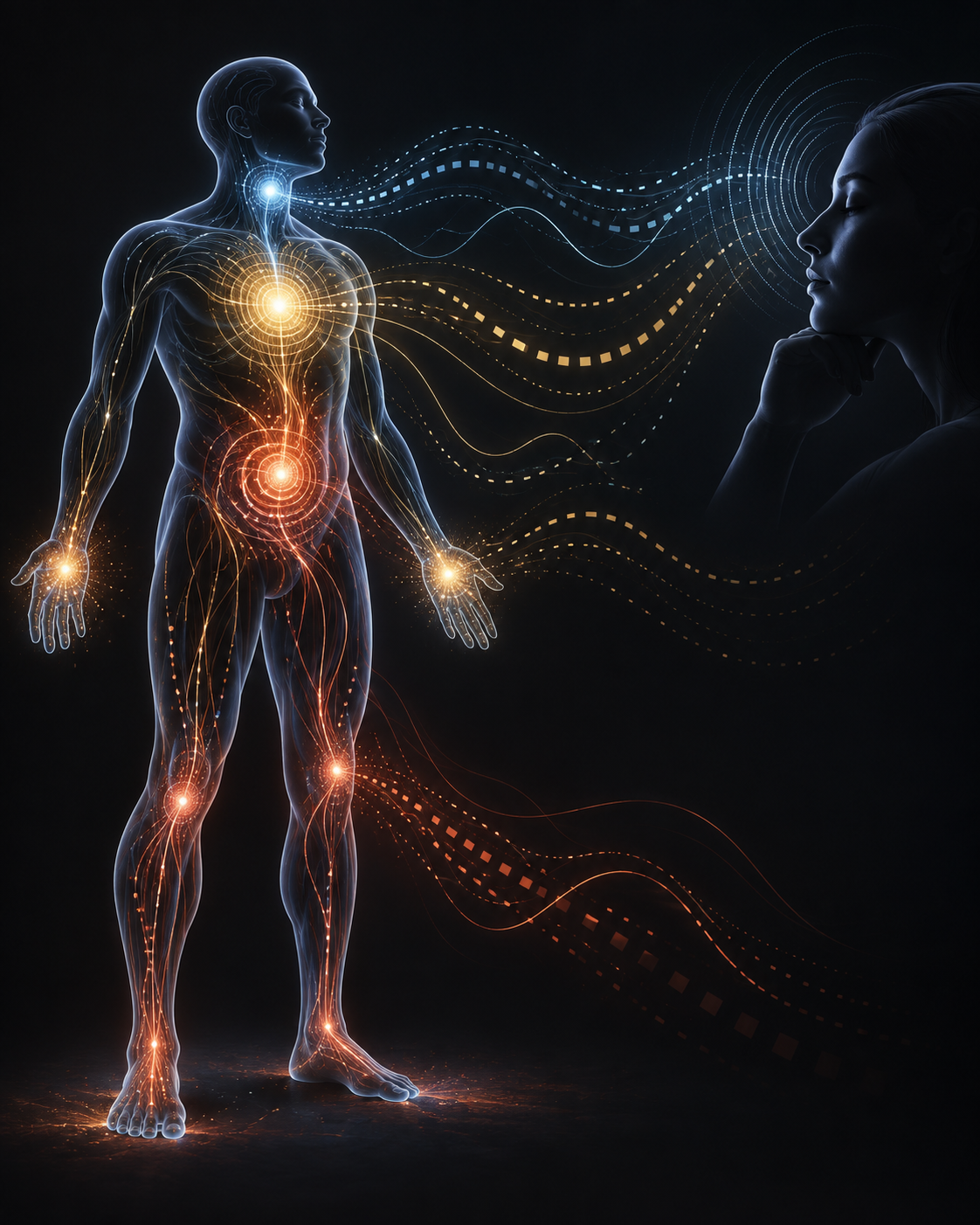
What if your body communicates what your conscious mind hasn't yet recognized? Drawing on neuroscience, psychology, somatic research, and spiritual traditions, this theory explores how subconscious experiences manifest through physical sensations, posture, and movement. By connecting body locations, sensation types, and emotional meanings, it develops a practical framework for recognizing and interpreting the language of the subconscious.
The Plasticity of Physical Expression: Reshaping Patterns Through Physical Form
18 min read
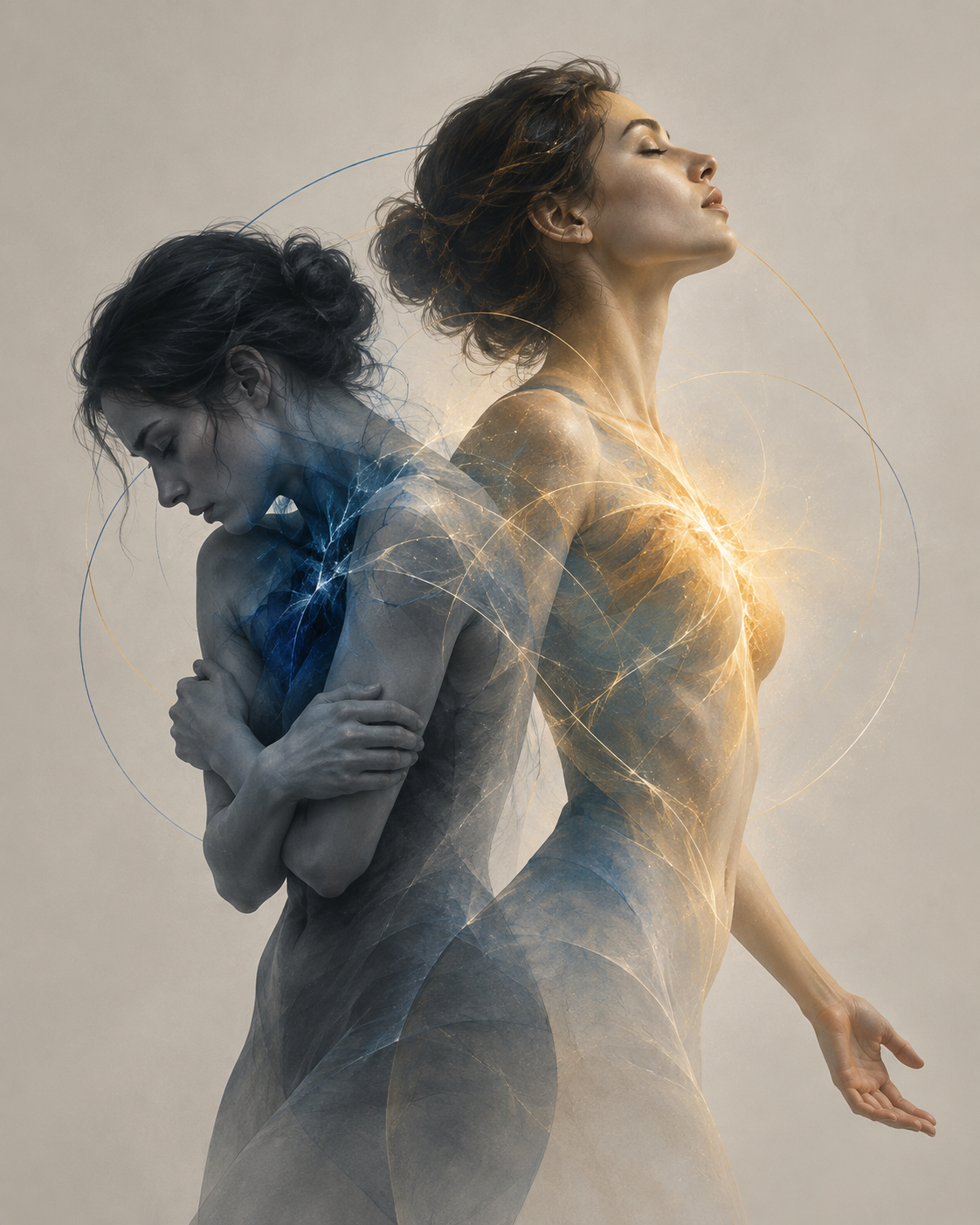
Our emotions shape how we move, but can changing how we move reshape our emotions? Drawing on research in neuroscience, psychology, posture, and movement, this theory explores how physical expression influences our thoughts, feelings, memories, and behaviors. It proposes that deliberately practicing different physical forms, through yoga, posture, or everyday movement, can do more than temporarily change how we feel. Over time, it may help reshape the subconscious patterns themselves.
Modulatory Oscillations: The Imperceptible Mechanics of Sound
24 min read
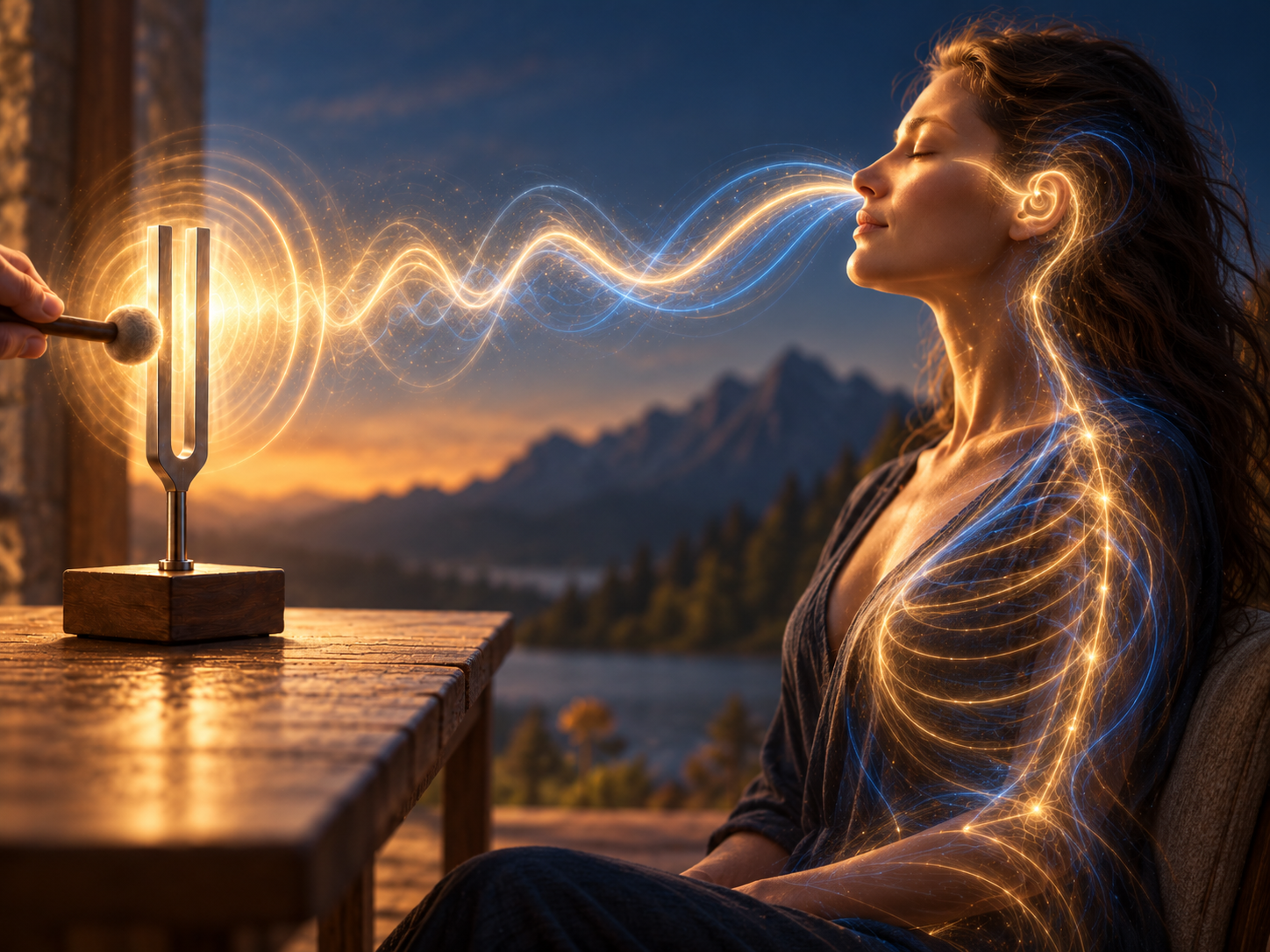
Sound does far more than give us something to hear. Its vibrations can organize matter, transfer energy, and influence the human nervous system. Drawing on physics, acoustics, neuroscience, and spiritual traditions, this theory explores how sound changes our physical and psychological states. It examines how music, voice, and vibration can open access to emotions, memories, and states of consciousness that create opportunities for healing and transformation.
Resonant Geometry: Geometric Composites, Bioresponsivity, And Sacred Geometry
22 min read

Geometry does more than shape our surroundings. It influences how our bodies and minds respond to the world. Drawing on neuroscience, physiology, architecture, and spiritual traditions, this theory explores how shapes, colors, proportions, and spatial arrangements produce biological responses. It proposes that combining these elements into precise geometric designs can create powerful effects on consciousness, offering a scientific explanation for why geometry was ever considered sacred.
Organic Reflections: The Role of Interpersonal Relationships in Ontological Evolution
27 min read

What if being “on the same wavelength” with someone is more than a metaphor? Science reveals that people naturally synchronize their brain activity, heart rhythms, and emotional states. Organic Reflections explores how this biological connection can amplify attraction, expose hidden psychological patterns, and reshape our capacity for love and intimacy. It proposes that relationships are not just part of our lives, but a biological mechanism through which consciousness itself evolves.
Teachers in Transience: Xenocognitive Lessons from the Animals We Call Family
28 min read

We call animals our companions, but perhaps we’ve misunderstood who is teaching whom. Cats show us how to love without surrendering independence, while dogs show us how to love beyond ourselves. Exploring animal intelligence, emotional bonds, and ancient spiritual teachings, this theory reveals how our relationships with other species may reflect two complementary paths of human development, each leading toward a deeper understanding of unconditional love.
Catalytic Contact: Transforming Transdermal Molecular Diffusion into Transcendent Sensory Union
28 min read

Every touch creates a biological exchange, even when we consider it meaningless. But touch can become something far more profound. Catalytic Contact follows the science of how skin, chemistry, sensation, and the nervous system respond to another person, then explores what changes when we bring greater awareness to that exchange. As our ability to feel and respond deepens, ordinary physical contact can become an extraordinary experience of shared sensation, intimacy, and love.
The Architecture of Connection: The Pull of People Who Shape Us
19 min read

Why do some people feel significant before we know them well enough to explain why? The Architecture of Connection explores how certain relationships can reach parts of us that are ready to grow, heal, or change. It examines the pull toward particular people, the fear that can accompany that pull, and how each meaningful connection can alter who we become and what becomes possible next.
Living Truth: The Power of Embodiment
29 min read

Living Truth explores how healing happens when we stop organizing our lives around fear and begin living from what is genuinely true within us. Our behavior can reveal needs, values, and desires that conscious self-description misses, while protective beliefs can keep those truths hidden. Healing is the process of removing that interference so authenticity becomes something we live naturally, not something we have to force.
Atemporal Wisdom: The Boundless Echo of the Self’s Spectral Wonder
35 min read
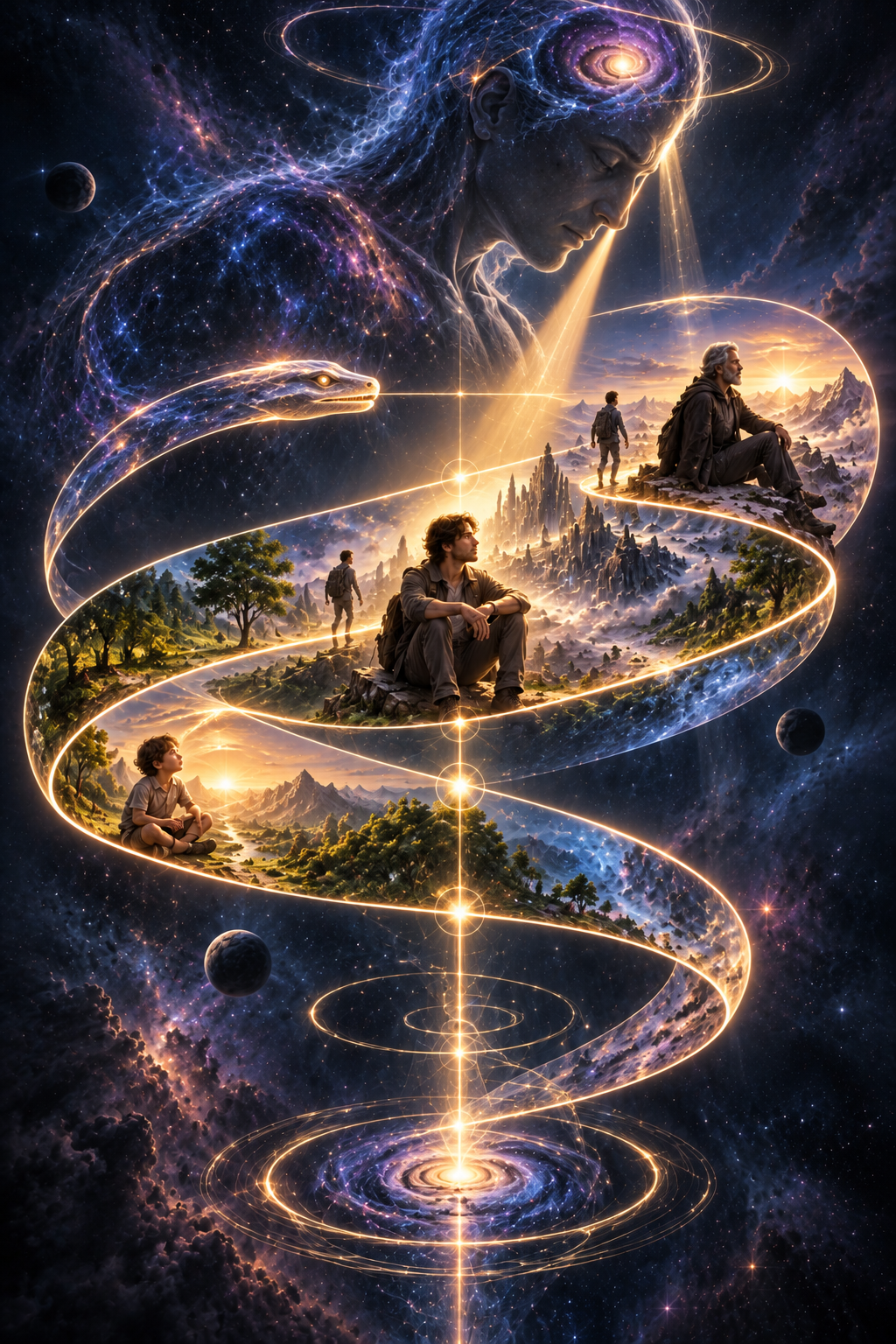
We experience consciousness one moment at a time, but the nature of time suggests a far more extraordinary picture of existence. Atemporal Wisdom unites research on memory, intuition, human development, and the physics of time with ancient symbolism to explore the deeper architecture of consciousness. From the mysteries of inner guidance to the boundaries of identity, it reveals a remarkable new perspective on the wisdom we possess and the extraordinary potential of the self.
Conscious Healing: Surrendering Fear’s Prison and Claiming Freedom’s Sovereignty
26 min read

What if expanding consciousness is more literal than we think? Conscious Healing explores how healing begins when what has been shaping us outside awareness becomes conscious, revealing a striking symmetry between psychological healing and spiritual development. As hidden experience enters awareness, the struggle against the self begins to loosen, allowing consciousness to replace fear with trust and confinement with freedom.
Fractional Unity: The Tree of Life and the Sea of Consciousness
30 min read
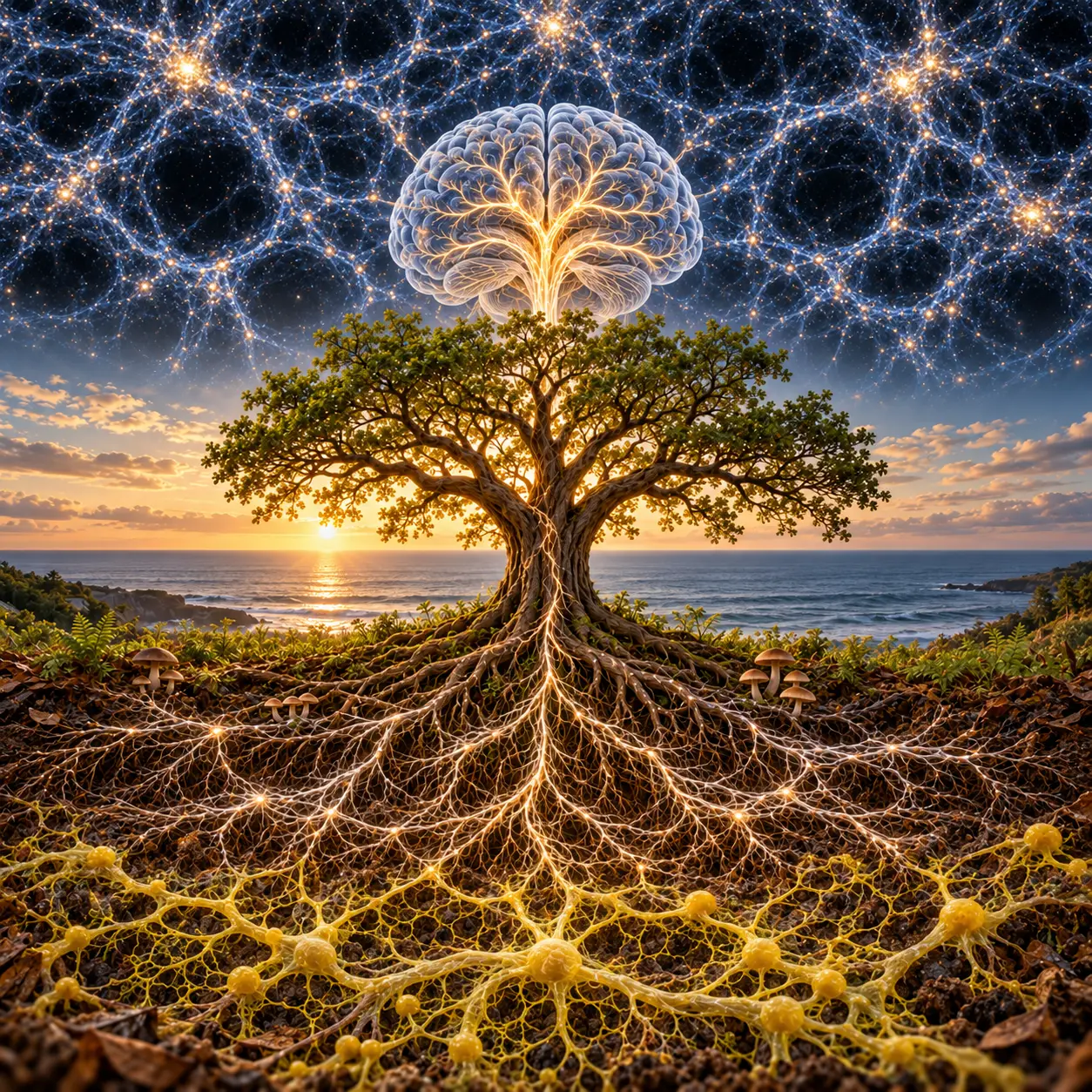
Every life may be a different branch of the same consciousness. Fractional Unity traces a remarkable pattern across living networks, synchronized human activity, physics, and the Tree of Life to explore how individual experiences contribute to a greater, evolving whole. In this vision, the journey toward divinity is neither the loss of individuality nor the end of discovery, but an infinite progression through which consciousness grows toward unity.
The Ouroboros: The Divine Curriculum of Consciousness
41 min read
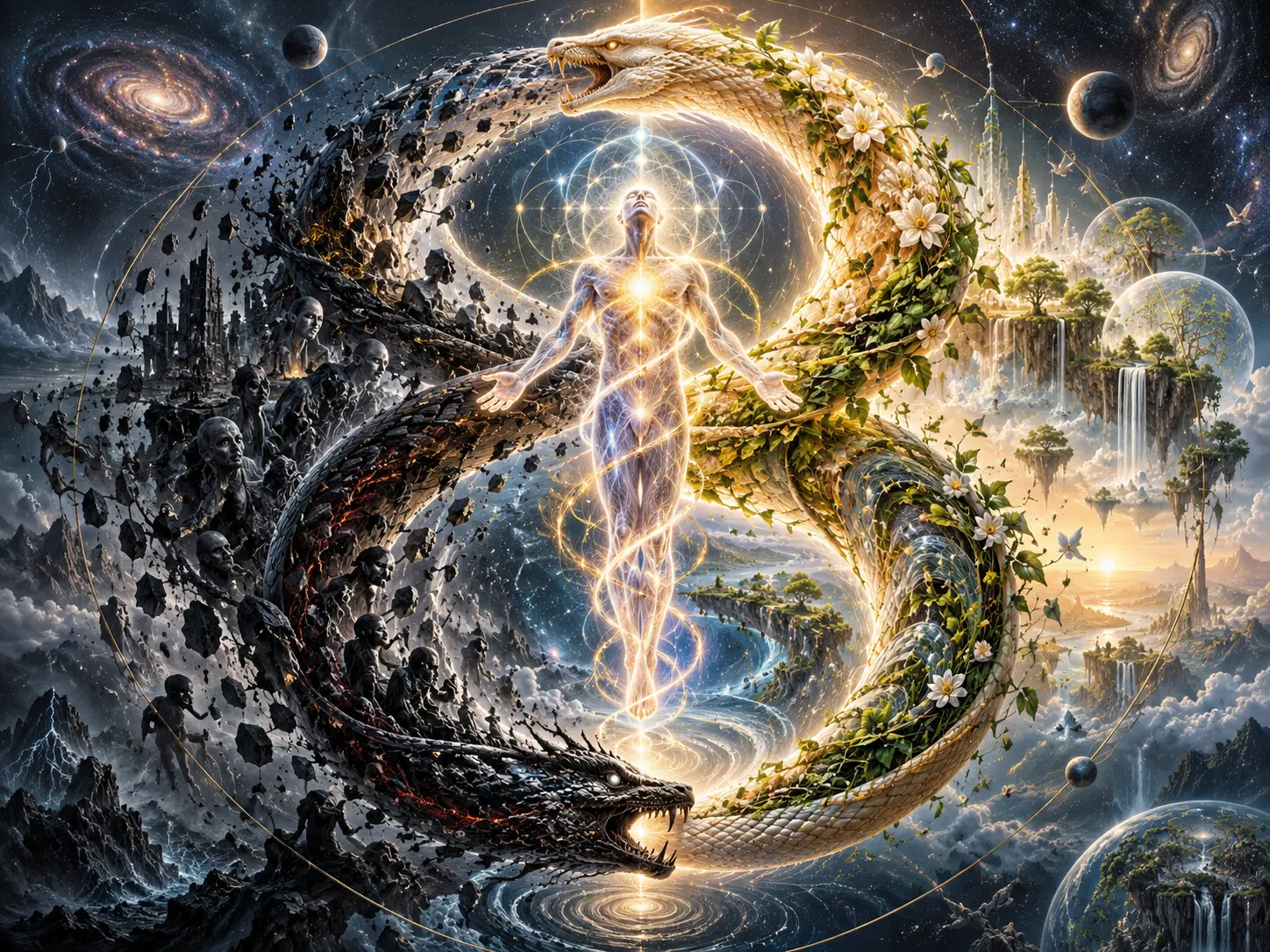
The Ouroboros asks what happens when healing no longer stops with the person who heals. A more integrated person changes the relationships they enter, those relationships change the people within them, and those people carry something different into the world. Healing spreads through human connection. Healed people help heal people, and that is how the world begins to heal.
Spiritual theories are speculative frameworks offered for exploration. They are not treatments, and they are not a substitute for the tested methods in the Healing Library.
Series Feedback
0 reviewsAnonymous feedback on the entire Conscious Curriculum series.
What clicked for you in this series could be what makes it click for the next reader.
Read all 20 papers to comment on the full series (0 of 20 read).
No feedback yet. Complete the series to be the first!