- Failed to fetch

Healing Through Unconscious Psychological Symbolism
Using Psychological Tarot for symbolic healing with AI
The Psychological Tarot Handoff
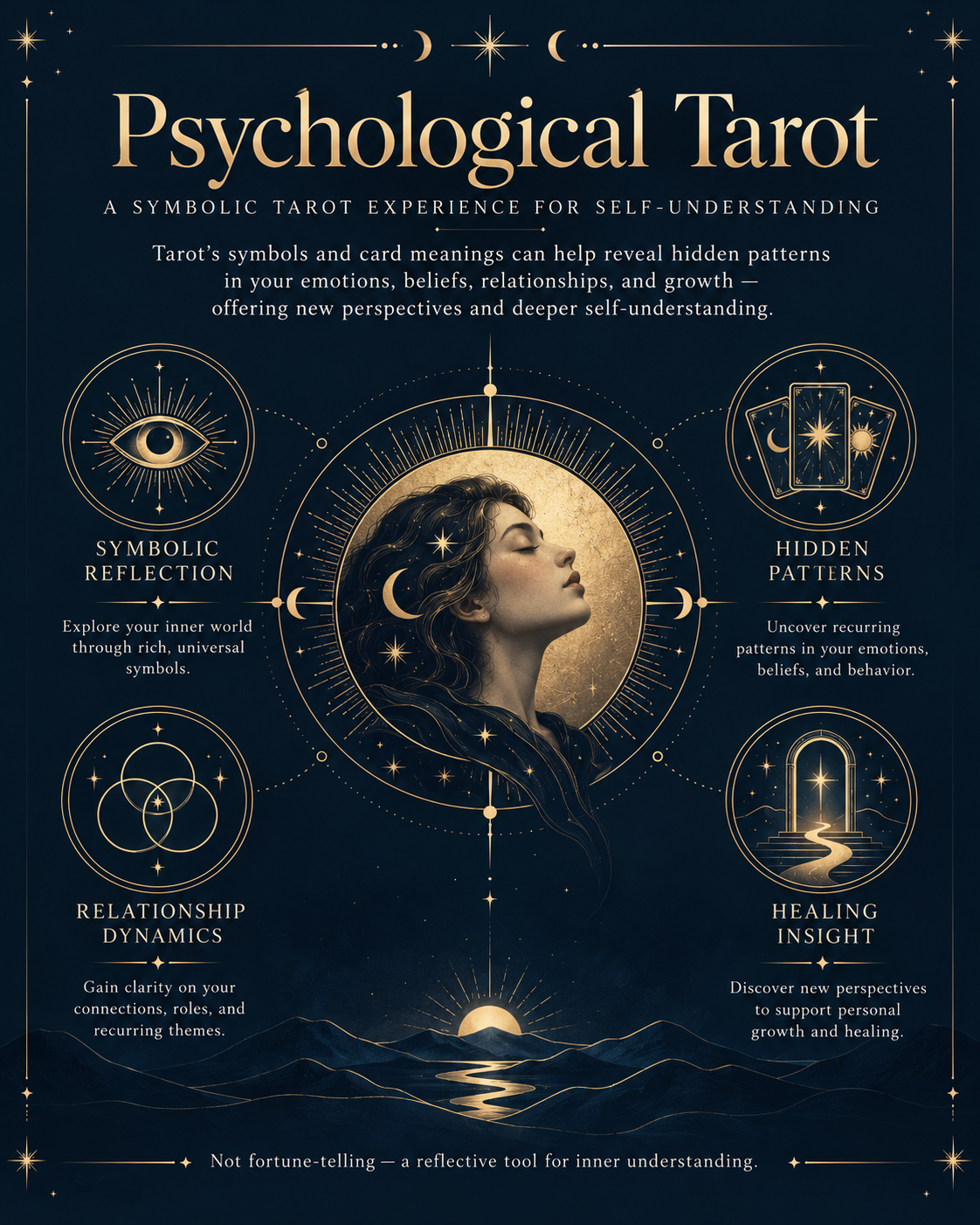
The Psychological Tarot Handoff is the companion to Conscious Attunement: The Mirror Of The Collective, the paper that sets out how tarot, metaphor, and other recursive symbols can evoke deeply personal resonance, reveal subconscious wounds, and provide emotional validation — and how symbols that gain meaning through repeated encounters become instruments of psychological healing. The handoff contains a complete working tarot reader: 294 unique cards (78 traditional and 216 custom), upright and reversed interpretations, 40 curated pairings, and rule-based multi-card readings — everything an AI needs to read from the same deck every time.
How To Use
- Download the handoff and upload the entire PDF to an AI. The AI reads the instructions that come inside the document and uses them as the reference point for the conversation, beginning the reading directly.
- The AI opens with a short welcome and two choices: a specific reading on a question, relationship, emotion, or situation, or an open reading that lets the cards introduce themes for reflection. Name the focus in plain language if you have one — no tarot terminology is needed.
- Work with what the reader draws: one to five rounds of two to three cards, each upright or reversed, with a distinct symbolic illustration beside every card's explanation, how the cards in each round interact, and a closing synthesis of the dominant pattern across rounds.
Tarot results are reflective and symbolic interpretation, not proof of objective events, third-party thoughts, certainty of future outcomes, or diagnosis, and this practice adds to ordinary care rather than replacing it.
Spiritual theories are speculative frameworks offered for exploration. They are not treatments, and they are not a substitute for the tested methods in the Healing Library.