
Spirituality & Religion Book Summaries
9 summaries available
Spirituality & Religion Book Summaries
Exploring faith, meaning, and transcendence.
The Immortality Key
by Brian Muraresku
Muraresku investigates evidence that psychedelic sacraments played a role in ancient Greek religion and early Christianity, raising the possibility that Western civilization has psychedelic roots.

The Prophets
by Abraham Joshua Heschel
Heschel analyzes the biblical prophets, examining their character and role, the nature of prophetic experience, and the prophets' understanding of a God who is deeply concerned with humanity.
Ishmael: An Adventure of the Mind and Spirit
by Daniel Quinn
In this novel, a telepathic gorilla named Ishmael teaches a student about humanity's relationship with nature. The story questions the cultural assumptions behind how modern civilization lives on the planet.
Synchronicity: An Acausal Connecting Principle
by Carl Jung
Jung explores meaningful coincidences that cannot be explained by cause and effect. He examines the probability of such events and proposes synchronicity as a principle that links the psyche and the physical world.

Infinite Mind: Science of the Human Vibrations of Consciousness
by Valerie Hunt
Hunt, a UCLA professor, describes her research measuring the body's electromagnetic field during altered states and energy healing. She presents a scientific framework for understanding consciousness as vibration.
Man Is Not Alone: A Philosophy of Religion
by Abraham Joshua Heschel
Heschel's philosophy of religion explores wonder, faith, and divine concern for humanity. He argues that moving beyond self-centered needs opens the way to meaning and purpose.
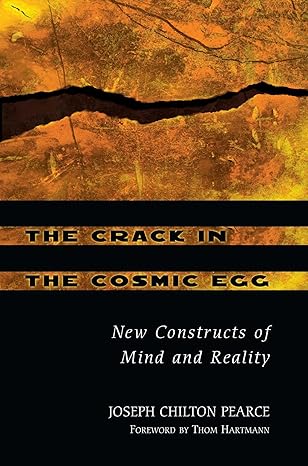
The Crack in the Cosmic Egg: New Constructs of Mind and Reality
by Joseph Chilton Pearce
Pearce explores how the shared assumptions of a culture limit what people believe is possible. Through cases of seemingly impossible feats, he examines how altered states can open new possibilities.
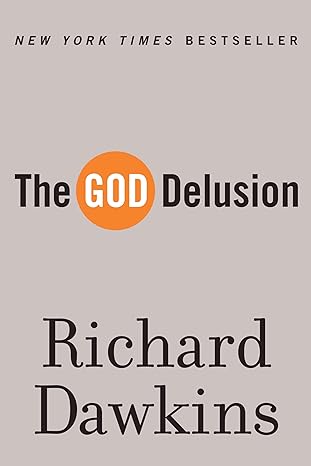
The God Delusion
by Richard Dawkins
Dawkins presents a critique of religious belief and its influence on society. The book invites readers to examine beliefs that are rarely questioned.
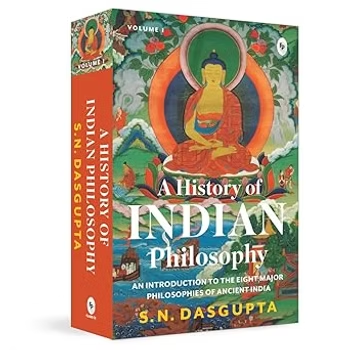
A History of Indian Philosophy
by Surendranath Dasgupta
Dasgupta surveys the development of Indian philosophical thought over time, including the major schools and branches of Hindu, Buddhist, and Jain philosophy.